

Nearly seven months have passed since the January 2026 protests—the largest popular uprising against the Iranian government since the 1979 Islamic Revolution, and one that became among the bloodiest episodes of protest in the country’s recent history.
Over the course of January 8 and 9, thousands of people were killed in the streets. The Islamic Republic has put the death toll at approximately 3,000, while the human rights organization HRANA has reported that at least 7,000 people were killed. Hundreds more were injured and thousands were arrested in the nationwide crackdown that followed.
The protests initially began among merchants in Tehran’s Grand Bazaar, amid growing anger over runaway inflation, the sharp rise in foreign exchange rates, and the collapse of the national currency. Following calls issued by opposition groups and figures outside Iran, the demonstrations expanded into nationwide anti-government protests on January 8 and 9.
Less than two months after the protests and the mass killing of demonstrators, the war waged by the United States and Israel against Iran began. For forty days, cities across the country, including the capital, Tehran, were subjected to bombardment.
As war, sanctions, and a naval blockade have further deepened Iran’s economic crisis and made everyday life increasingly difficult, the Iranian judiciary and security apparatus have simultaneously intensified their repression of protesters to an exceptionally severe and unprecedented degree.
Young people—many with no previous history of political activism—who took to the streets to peacefully express their frustration with the country’s deteriorating conditions have been handed lengthy prison sentences. At the same time, death sentences have been issued one after another against protesters, most of whom are under the age of thirty. Many have no previous record of arrest or prosecution and have never been affiliated with any political party or organization.
The scale and severity of these sentences demonstrate that, while the Islamic Republic is engaged in a war with external enemies, it is simultaneously waging a deeply unequal war at home against protesters, dissidents, and critics.
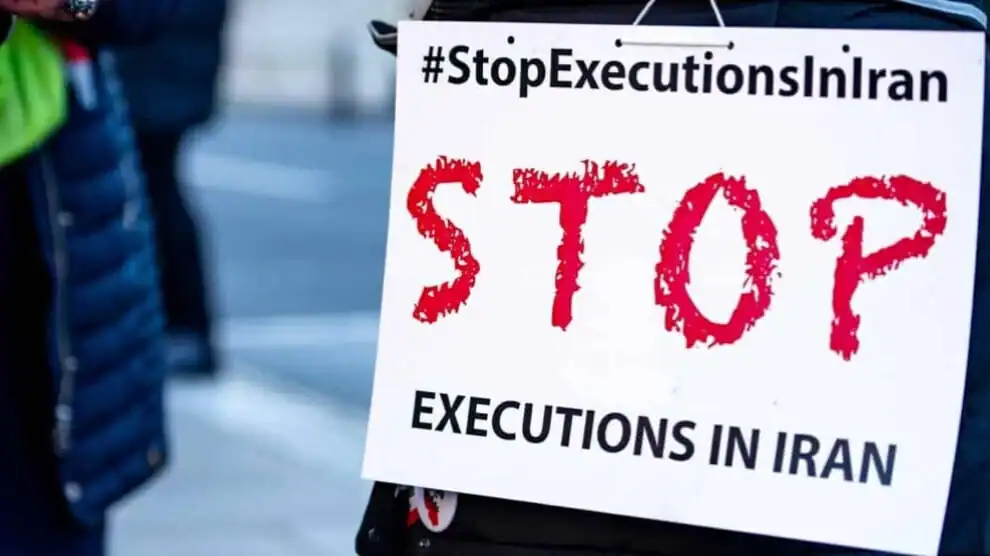
So far, at least 27 protesters arrested in connection with the January demonstrations have been executed. According to human rights groups, at least 60 more protesters have received death sentences, while dozens of others are awaiting trial on serious charges that could potentially result in similarly harsh sentences.
In recent months, Iranian courts have also prosecuted numerous protesters under the newly enacted law on the “Intensification of Punishment for Espionage,” sentencing defendants to death or lengthy prison terms. The law was adopted in October 2025, following the Twelve-Day War, and has since provided the legal basis for numerous sentences against protesters, civil society activists, and individuals arrested on allegations such as espionage or collaboration with Israel or the United States.
Available information about court proceedings, however, has raised serious concerns about the evidence presented against defendants, the nature of the charges, and the fairness of the judicial process in many of these cases.
The authorities have continued to expand the legal framework available for criminalizing dissent and restricting contact with the outside world. On August 16, 2026, Iran’s Parliament, holding its first in-person session after months of suspension, approved a bill titled “Countering the Infiltration of Foreign Intelligence Services, Governments, or Institutions in the Country.”
Under the bill, interviews or communication with media outlets outside Iran without prior coordination with security authorities, as well as communication with international organizations and institutions, are criminalized and punishable by imprisonment. The measure further expands the risks facing journalists, human rights defenders, civil society activists, and others who communicate with international organizations or independent media.
Against this backdrop, Femena’s sixth report examines the cases of additional women arrested in connection with the January protests. Nearly seven months after their arrest, some of these women remain behind bars without a final verdict and in a state of prolonged legal uncertainty. Others have been sentenced to prison and are currently serving their terms.
Their cases illustrate the continuing use of detention, prosecution, lengthy prison sentences, and increasingly severe national-security charges against women who participated in, supported, or were otherwise associated with the January protests. As attention has increasingly shifted toward the war and its devastating consequences, these women—and thousands of other protesters detained in its aftermath—continue to face repression largely outside the international spotlight.
Read the full report below.
You can also access other reports: Report No.1, Report No.2, Report No.3, Report No.4, Report No.5