

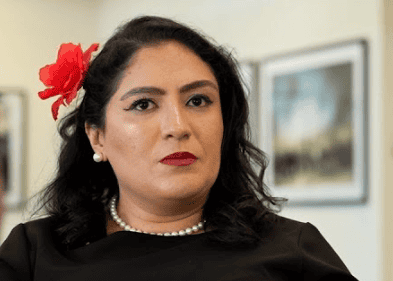
Prominent Iranian photojournalist Yalda Moaiery has been sentenced to 15 years in prison on charges of “activities in furtherance of the interests of the Zionist regime and the United States,” in yet another alarming case demonstrating how Iran’s newly expanded espionage legislation is being used to criminalize journalism, documentation, and peaceful civic activity.
The sentence was issued in absentia, without Moaiery being present at the trial or having an opportunity to defend herself. In addition to 15 years of imprisonment, the court ordered the confiscation of her cameras, photography equipment, and mobile phone. She was also banned from cultural and artistic activities and barred from public-sector employment.
Moaiery is one of Iran’s most prominent photojournalists and has documented major political and social developments in the country for more than two decades. She was previously arrested during the Woman, Life, Freedom uprising, spending more than three months in detention. Following that arrest, she was sentenced to imprisonment and additional punishments, including unpaid public service as a street cleaner—a degrading measure widely viewed as intended to humiliate and punish her for her professional work.
A New Legal Tool for Repression
Moaiery’s latest conviction was reportedly issued under Iran’s new law on “Intensifying Punishment for Espionage and Cooperation with the Zionist Regime and Hostile States,” adopted in October 2025 in the aftermath of the Twelve-Day War.
The law dramatically expands the range of activities that can be interpreted as espionage or cooperation with hostile states. Its vague and overly broad provisions create the possibility that ordinary journalistic and human rights activities—including collecting information, documenting violations, taking photographs or videos, and sharing material with foreign media or organizations—can be prosecuted as national-security crimes.
The implications extend far beyond the case of one journalist. In recent months, Iranian authorities have increasingly relied on this legislation against protesters, political detainees, journalists, and civil society actors. Defendants prosecuted under its provisions can face extremely harsh punishments, including lengthy prison terms and, in some circumstances, the death penalty.
The prosecution of Moaiery illustrates the dangerous consequences of transforming legitimate journalistic activity into evidence of “espionage.” For journalists, photographers, human rights defenders, and citizen journalists working in an increasingly restricted civic space, documenting what happens inside Iran can itself become grounds for prosecution.
Femena strongly condemns the 15-year prison sentence imposed on Yalda Moaiery and calls for its immediate and unconditional annulment.
Iranian authorities must end the use of vaguely defined espionage and national-security charges to silence journalists, photographers, human rights defenders, and other civil society actors. Taking photographs, documenting human rights violations, and sharing information with the public are not acts of espionage.