

Background:
Nooriya, a young girl living in Zargun village in Nad Ali district, Helmand province, became the sole provider for her family after the death of her father. With the Taliban’s sweeping ban on women’s public life, the blanket prohibition on girls’ education beyond sixth grade, restrictions on women’s work, and limitations on free movement, she was forced to find ways to survive. To feed her family, she disguised herself in male clothing and worked in a restaurant for years. This act of survival was later turned against her after her abduction and coerced confession, details of which were circulated in a video recording.
Incident:
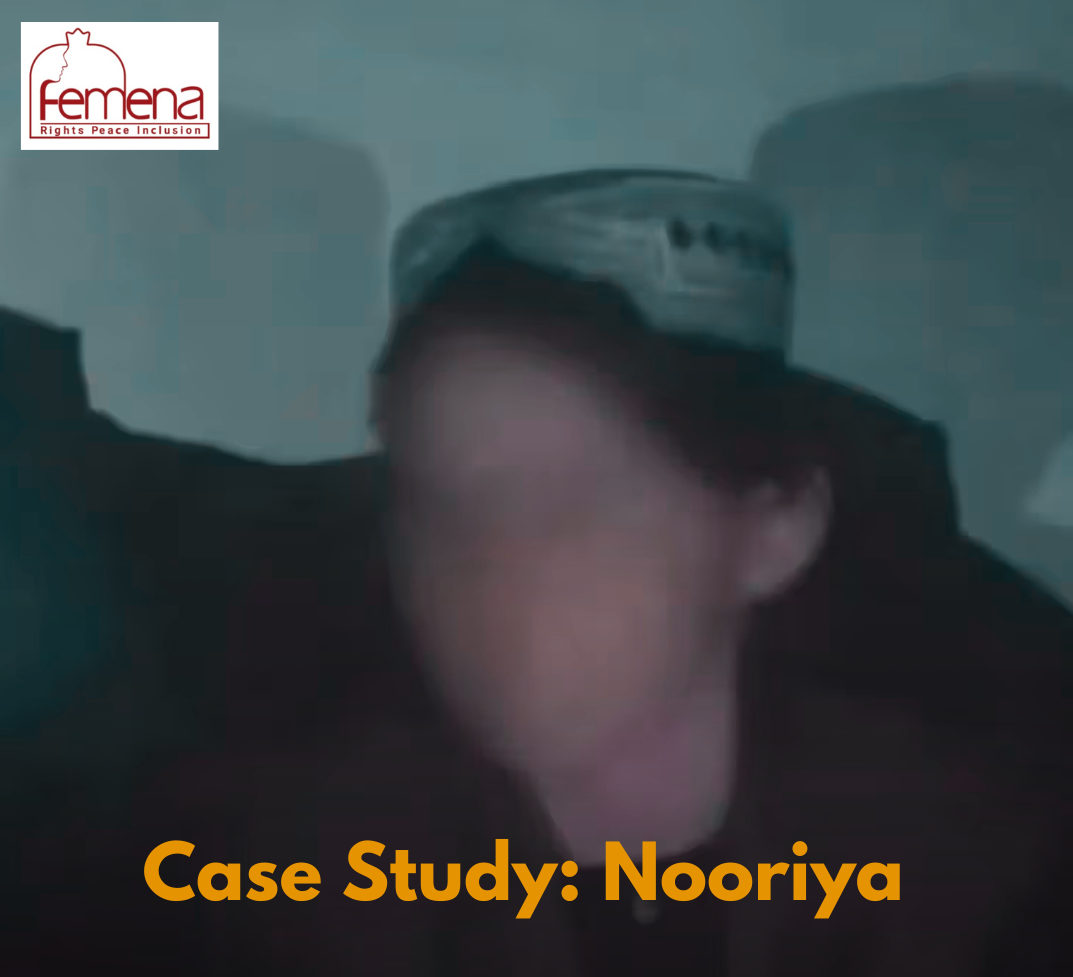
While the exact location and date of the recording are unclear, Nooriya is shown being questioned by a person who introduces himself as a member of the Taliban. In the video, she states:
“I was forced to do this. I have nobody. No one does this for fun. It is due to obligation. My father has passed.”
She identifies herself as Noor Ahmad, stating that she is 13 years old. This testimony illustrates the extreme pressures faced by girls under Taliban rule, where survival strategies are criminalized.
Education Exclusion:
Since the Taliban’s return to power in August 2021, girls and women have been systematically barred from secondary and higher education making Afghanistan the only country in the world enforcing such a prohibition. As of 2025, an estimated 2.2 million Afghan girls remain deprived of secondary schooling, with roughly 80 % of school‑age girls excluded from education beyond primary level due to those bans. Projections by UNICEF suggest that if restrictions continue to 2030, over 4 million girls could be denied their right to a full education.
Economic Exclusion & Poverty:
The effects extend beyond education into the economy. Women’s participation in formal employment has plummeted, with UN data showing that only around 6–7 % of women are employed outside the household, one of the lowest rates globally. Female labor force participation and exclusion from economic life have compounded poverty pressures, especially for female‑headed households.
Afghanistan as a whole faces deepening socioeconomic crisis: poverty affects over 60 %of the population, with multidimensional measures showing entrenched deprivation across education, health, and living standards.
Policy & Penal Code Environment:
Beyond bans on schooling and work, the Taliban’s recent legal framework, including the Propagation of Virtue and Prevention of Vice law and the new penal code, codifies intrusive gender restrictions and gives Taliban members wide discretion to abduct, prosecute, and publicly shame women for “offences” that often reflect survival responses rather than genuine wrongdoing. These procedural changes have worsened women’s vulnerability to coercion, abduction, and exploitation.
Analysis & Impact:
Nooriya’s case illustrates the gendered impact of Taliban policies: girls are excluded from education, barred from work, and forced into survival strategies. Her own words: “I was forced to do this. I have nobody…” highlight the human cost of these policies, which affect millions of Afghan girls.
Conclusion and Call to Action:
Nooriya’s story is one of many showing systematic gender-based persecution in Afghanistan. Women and girls are denied education, barred from work, and subjected to abduction and public humiliation; yet they are finding every way to fight back and stay part of society. The international community must hold the Taliban accountable through targeted sanctions, travel bans, ICC/ICJ mechanisms, and support for women’s education and livelihoods.