

Reflections on Parastoo Forouhar’s Interview with Farnaz Ghazizadeh
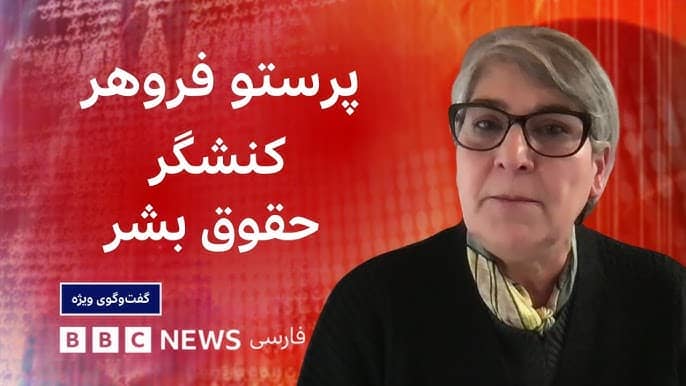
In the midst of rapid-fire news cycles and emotionally charged political climates, voices that call for “pause” and “accountability” are not just necessary—they are vital. This video features a candid and critical conversation with Parastoo Forouhar, an artist and prominent human rights activist. With a diagnostic lens, she redefines the relationship between activists (particularly those in the diaspora) and the grassroots struggles of people inside Iran.
Forouhar draws a sharp line between standing with the people and issuing commands for war. She argues that the duty of Iranians abroad is to echo the voices of protesters and offer solidarity not to issue calls to action from a position of safety. She warns that calling for street protests without providing guarantees for safety or considering the brutal imbalance of power turns defenseless citizens into “unarmed soldiers” facing a heavily armed military apparatus.
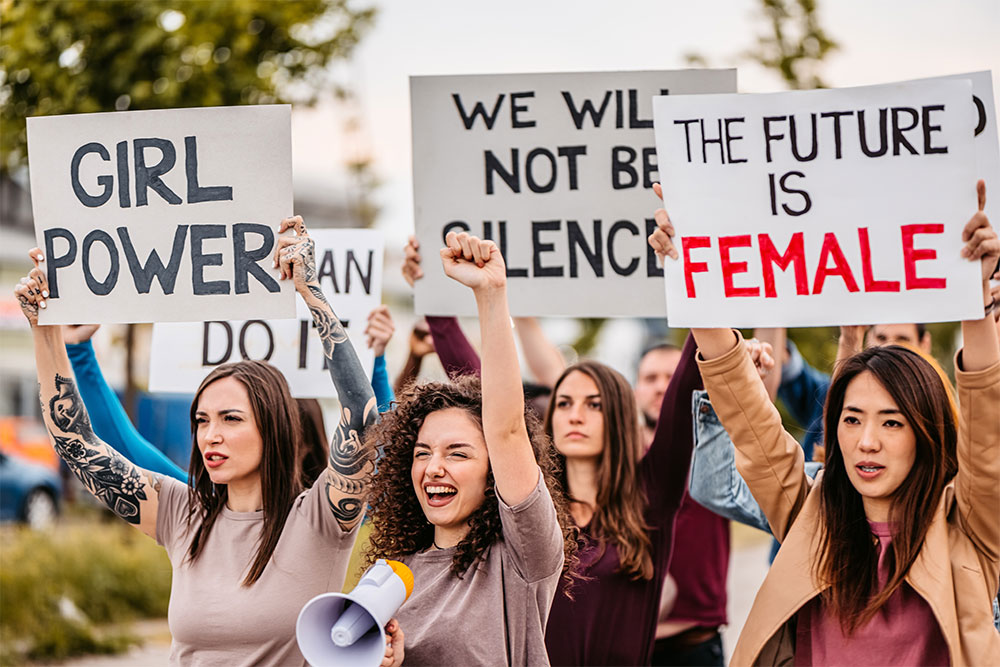
One of the most poignant parts of this dialogue is Forouhar’s emphasis on the life-centered nature of the “Woman, Life, Freedom” movement. She reminds us that the foundation of this slogan is a shift from a culture of death and violence toward one that prizes human life and dignity.
“We do not have the right to turn people who have risen for life and liberty into ‘cannon fodder’ in an unequal war,” she asserts.
Her message is clear: the strategy of struggle must not reproduce violence or lead to avoidable tragedy.
As some look toward foreign leaders for regime change in Iran, Forouhar decisively rejects this path. While warning against policies that could lead to the destruction of the country’s infrastructure, she places her trust in the immense capacity of domestic civil society. Despite brutal repression, she believes Iranian society retains the potential to build its own future. This internal power, she argues, should not be depleted by violent shortcuts or false hopes placed in foreign intervention.
This video is more than a political interview; it is an ethical manifesto in praise of “Responsible Resistance.”