

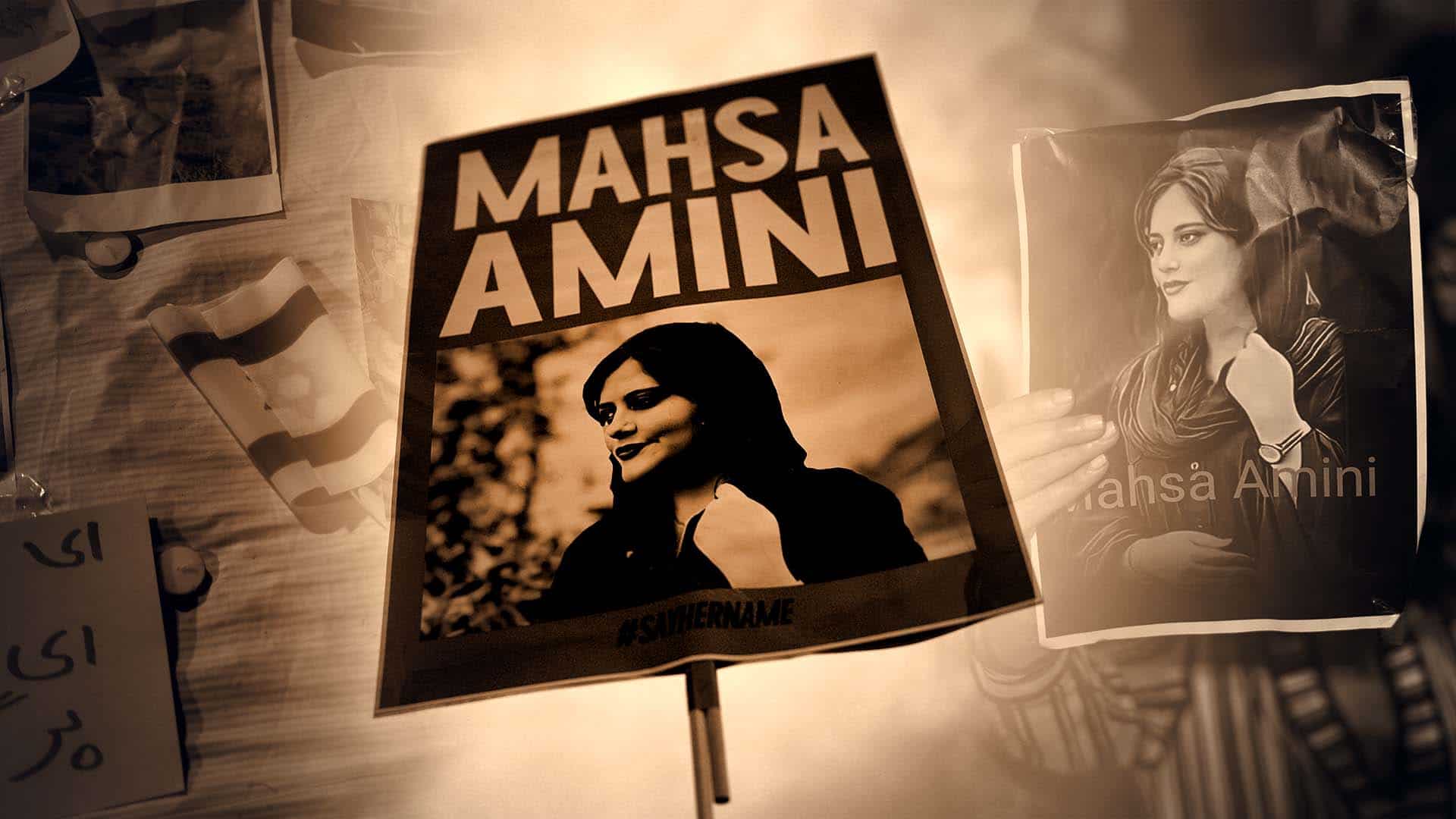
Four years have passed since Mahsa Jina Amini died in the custody of Iran’s morality police, sparking the nationwide “Woman, Life, Freedom” uprising—a movement that profoundly transformed Iranian society and placed the demands for women’s freedom, equality, and human dignity at the center of public discourse.
Mahsa Jina Amini, a 22-year-old Kurdish woman from Saqqez, was arrested by morality police officers while visiting Tehran in September 2022 for allegedly failing to comply with the country’s mandatory hijab rules. Hours after her arrest, she was transferred to a hospital in a coma and died three days later. Her death in custody constituted a grave violation of the right to life and became a symbol of the systemic violence that women in Iran have endured for decades, particularly through compulsory hijab laws and the state’s control over their bodies, clothing, and private lives.
Mahsa Jina Amini’s death unleashed the accumulated anger of Iranian women who had faced years of arrest, humiliation, violence, and threats over their clothing. Many women in Iran saw their own experiences reflected in hers : being detained and humiliated in public for allegedly failing to observe mandatory hijab rules and being denied the right to make decisions about their own bodies and lives.
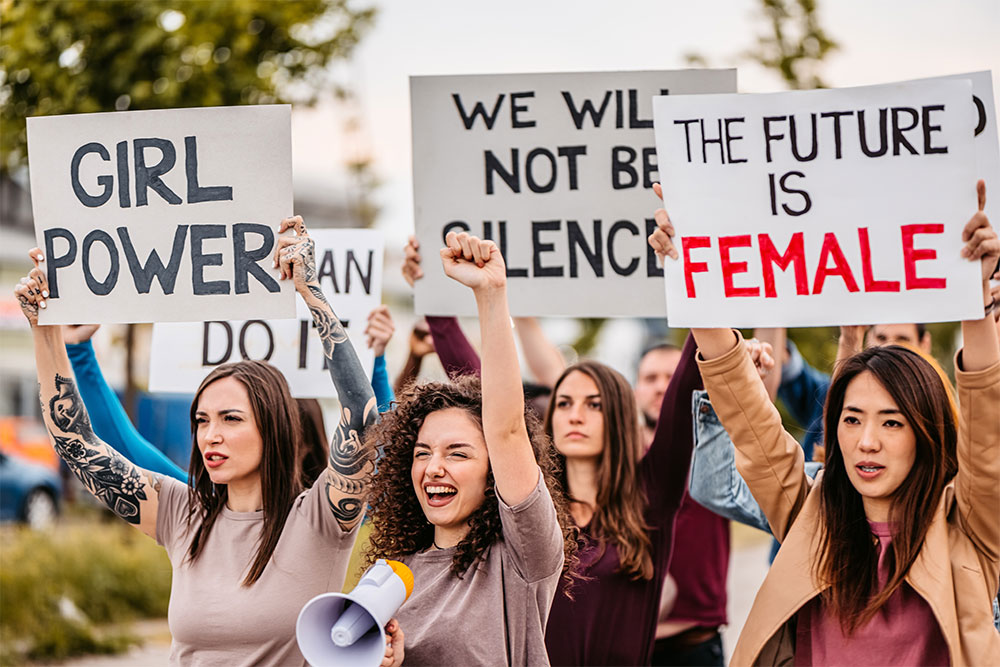
The “Woman, Life, Freedom” uprising , whose defining slogan is rooted in Kurdish women’s struggles, rapidly spread across Iran. It challenged not only the patriarchal structure of the state but also unequal power relations within families, society, and parts of the opposition. Resistance extended from the streets into homes, schools, universities, workplaces, and everyday life. Woman, Life, Freedom’s progressive vision—grounded in freedom, justice, gender equality, and the right to live a dignified life free from violence—also inspired women and freedom-seeking movements throughout the region and around the world.
The state responded to these demands with widespread and organized violence. Hundreds of people were killed during the protests, thousands were arrested, and many protesters were subjected to torture, forced confessions, denial of access to lawyers of their choosing, and unfair trials. Women, children, ethnic and religious minorities, and residents of Kurdish regions and Baluchistan bore a disproportionate share of this violence.
Four years later, a number of those detained in connection with the movement continue to serve lengthy prison sentences. In 2026, after three and a half years in detention, two protesters arrested during the “Woman, Life, Freedom” uprising were executed. Mehrab Abdollazadeh and Aref Khoshkar were executed in February and July 2026, respectively. Their executions once again demonstrated how the death penalty has been used as an instrument to spread fear, suppress dissent, and punish political opposition.
A Society Caught Between Domestic Repression and Military Violence
Over the past four years, Iranian society has faced a series of devastating crises: intensifying domestic repression; the near-total closure of political and civic space; deepening poverty and inequality; the devastating economic effects of sweeping sanctions on people’s everyday lives; and illegal military attacks by Israel and the US that have killed civilians, including children and endangered the lives and security of Iranian citizens collectively.
Decades of denying people meaningful political participation, the persistent repression of protests, and deteriorating economic conditions paved the way for another wave of widespread demonstrations which began in late December 2025 culminating in massive violence and killings on January 8 and 9, 2026. The state once again responded with lethal force and violence against protesters, mass arrests and communications blackouts. Published estimates of the death toll vary, but even official figures indicate that thousands were killed, while human rights organizations have reported higher numbers.
Only a few weeks later, and while Iranians were still mourning the deaths of thousands of protesters, they were subjected to yet another illegal round of war and military aggression by the US and Israel. These attacks, together with the prolonged shutdown of internet and communications services, further exposed civilians to death, displacement, insecurity, and deprivation of essential services.
The US President and longtime US hawks as well as some diaspora based monarchist groups and Iranian opposition figures advocated for illegal military attacks against Iran’s sovereignty and the Iranian people as a justified response to state repression and violence. It is however imperative to stress that opposing the Islamic Republic and condemning the widespread and systematic human rights violations committed by the state can and should never serve as a justification for the unlawful use of force, violations of Iran’s territorial sovereignty, or attacks against civilians and civilian infrastructure. The rights of the Iranian people must be protected both from state repression and from foreign military violence and intervention.
The illegal war against Iran, by the US and Israel has since engulfed the region, and despite some diplomatic efforts it continues. Many believe that a more forceful round of conflict is yet to come, while there has been speculation that the US administration is considering the use of nuclear weapons against Iran.
We caution restraint by all parties and urge them to resume political discussions. The only solution to this devastating war continues to be a political one. We also remind all parties to the conflict about their obligation to respect the fundamental principles of international law, including distinction between military and civilian targets, proportionality, and the duty to take all feasible precautions to protect civilians. Attacks on schools, hospitals, healthcare facilities, residential areas, and other civilian infrastructure must be independently investigated, and those responsible for any violations must be held accountable.
A Resistance That Will Not Be Reversed
Four years after Mahsa Jina Amini’s death, Iran’s future remains deeply uncertain. Yet Iranian society is no longer the society it was before September 2022. The widespread presence of women in public spaces without compulsory hijab, their everyday resistance to discriminatory laws, and increased public awareness of gender equality are among the most enduring achievements of the “Woman, Life, Freedom” movement.
These changes were not concessions granted by the state. They are the result of years of struggle and the immense price paid by women who, despite arrest, violence, exclusion from education and employment, vehicle seizures, fines, and the closure of businesses, have continued to claim their rights to bodily autonomy, freedom of dress, and equal participation in society.
In recent weeks, reports from cities including Isfahan, Rasht, Fuman, Mashhad, and Neyshabur have indicated an increased presence of morality police forces and renewed arrests of women on hijab related charges. At the same time, cafés, galleries, cultural centers, and other businesses continue to face closure and fines because women not observing the compulsory hijab have frequented these establishments. Imposing economic penalties on businesses to compel them to enforce mandatory hijab constitutes a form of collective punishment and shifts responsibility for state repression onto ordinary citizens.
Nevertheless, the struggle that Iranian women began in the first days following the 1979 Revolution against compulsory hijab and other discriminatory laws has never ceased. The “Woman, Life, Freedom” movement is both a continuation of this long history of resistance and the beginning of a new phase in the struggle for equality, freedom, and human dignity.
On the fourth anniversary of Mahsa Jina Amini’s death, Femena honors her memory and the memory of all those killed during Iran’s Woman, Life, Freedom uprising. We reiterate the urgent need for truth, justice, reparations, and guarantees of non-recurrence.
We call for:
- An independent, impartial, and transparent investigation into Mahsa Jina Amini’s death, and the identification and fair prosecution of all those who ordered, enabled, or perpetrated the violations that led to her death;
- An independent investigations into the killing of protesters, torture, sexual and gender-based violence, enforced disappearances, and other serious human rights violations;
- The immediate and unconditional release of all those detained or imprisoned solely for peacefully exercising their human rights;
- An immediate halt to executions and the annulment of death sentences imposed following unfair trials;
- An end to compulsory hijab, the dismantling of the repressive mechanisms used to enforce it, and the repeal of all laws and policies that discriminate against women;
- Respect for the rights to freedom of expression, peaceful assembly, association, and political and civic participation;
- An end to unlawful military attacks and the full protection of civilians and civilian infrastructure; and
- The establishment of effective mechanisms to ensure accountability, provide reparations to victims, and guarantee the non-recurrence of these violations.
Acknowledging responsibility and holding accountable those who ordered and carried out the actions that led to Mahsa Jina Amini’s death and the deaths of other protesters are the most basic demands of the victims’ families and Iranian civil society. Four years after Mahsa’s death, the demand of the Iranian people remains clear: the right to live freely, equally, and safely, without violence, discrimination, repression, or war.
Woman, Life, Freedom