

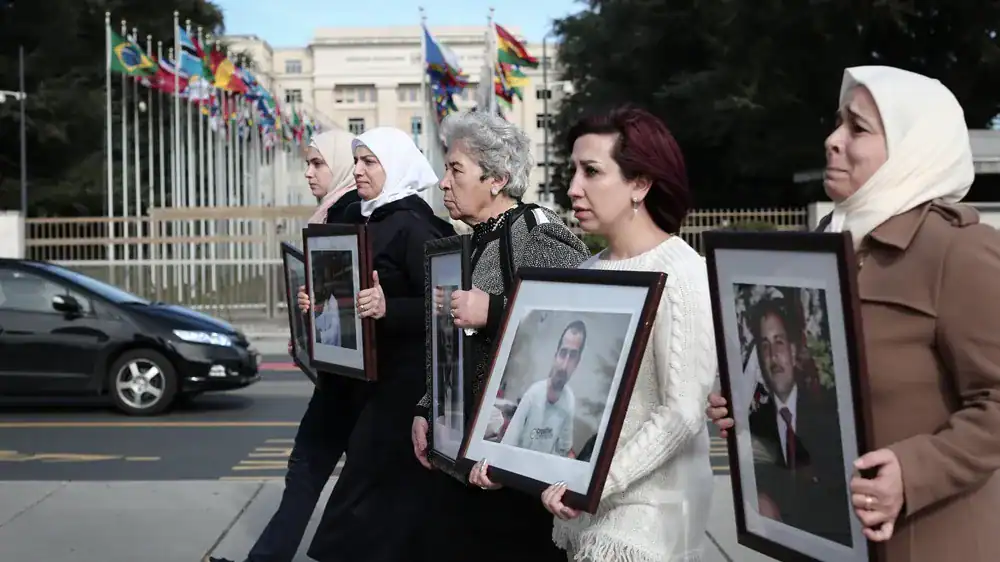
The recent rulings against Bashar al-Assad, Maher al-Assad, and Atef Najib mark an important development in ongoing efforts to pursue accountability for violations committed in Syria. After decades of widespread violations and impunity, holding those responsible to account is essential. Accountability processes should uphold international human rights standards and victims’ rights to truth, justice, and reparation.
The gravity of the crimes at stake, however, does not lessen the importance of ensuring that justice itself is grounded in human rights. This includes respect for fair trial guarantees, judicial independence, and the right to life. Femena opposes the use of the death penalty in all cases, including for those accused or convicted of the gravest crimes. Rejecting the death penalty does not diminish the gravity of these crimes or the rights of victims and survivors to justice. Rather, those responsible for crimes under international law and serious human rights violations should be held accountable through fair and independent proceedings, without recourse to the death penalty.
Syria’s transitional justice process will also need to go beyond individual prosecutions. The violations Syrians have endured were not only the actions of individuals; they were also enabled by laws, institutions, and practices that allowed abuse and impunity to persist. Addressing that legacy requires institutional and legal reform, reparations for victims and survivors, and concrete guarantees of non-recurrence. This also entails rebuilding the relationship between people and the state and addressing socioeconomic conditions that can reproduce exclusion and inequality.
It also matters who shapes this process.
Women, survivors, feminist activists, women human rights defenders, victims’ groups, grassroots organizations, and communities directly affected by violations bring knowledge and experiences that must inform the pursuit of justice. Their participation is particularly important as Syria considers the laws and institutions that will shape its future.
For Femena, this is also a question of what kind of transition is being built. Addressing past violations must go hand in hand with ensuring that new laws and institutions uphold equality and non-discrimination, including the rights of women and marginalized communities.
Femena calls on Syrian transitional authorities and all actors involved in shaping transitional justice processes to:
- Ensure that accountability processes are independent, impartial, and consistent with international human rights standards, address serious violations without selectivity, and uphold fair trial guarantees without recourse to the death penalty;
- Guarantee the meaningful and safe participation of women, survivors, feminist activists, women human rights defenders, victims’ groups, grassroots organizations, and affected communities in the design and implementation of transitional justice processes;
- Undertake legal and institutional reforms that address the structures and practices that enabled violations and impunity, while safeguarding equality and non-discrimination;
- Ensure victims and survivors have access to truth, justice, effective remedies and reparation, alongside concrete guarantees of non-recurrence.
- Ensure that transitional justice and reconstruction efforts contribute to rebuilding an inclusive and rights-based social contract, address the socioeconomic inequalities deepened by conflict, repression, and displacement, and enable women and affected communities to meaningfully participate in shaping Syria’s economic and social future.
Accountability is an essential part of this process. So are truth, reparations, institutional reform, the rebuilding of a rights-based social contract, and the participation of those who have lived through and challenged Syria’s long history of repression. A justice process grounded in human rights is not at odds with accountability; it is what gives accountability its legitimacy.