

Military operations by the United States against Iran have officially resumed following the collapse of the ceasefire announced earlier this summer. Southern Iranian provinces have been subjected to sustained missile strikes and aerial bombardment for approximately ten days, resulting in civilian casualties, damage to critical infrastructure, and growing humanitarian concerns. Over the past 24 hours, the military strikes have expanded to other Iranian cities, including parts of Tehran, Semnan, Lorestan, and Urmia.
On 8 July, U.S. President Donald Trump announced, during the NATO Summit, that the ceasefire with Iran had formally ended, claiming that Iran had failed to comply with its terms. On 14 July, he warned that unless Iran entered negotiations, the United States would begin a new phase of military operations targeting Iran’s critical infrastructure. He stated that power plants would be targeted first, followed by bridges, while reports also indicate that a naval blockade of Iran has begun.
The expansion of military operations toward civilian infrastructure raises serious concerns under international humanitarian law, particularly regarding the protection of civilians and civilian objects during armed conflict.
Attacks on Civilian Infrastructure
The renewed offensive has disproportionately affected southern Iran, where most of the country’s oil, gas, petrochemical, and energy infrastructure is concentrated.
According to publicly available reports, recent U.S. strikes have damaged or destroyed several civilian facilities, including:
- the telecommunications tower in Bandar Abbas;
- the desalination plant in Bushehr;
- a mineral production facility in Dehloran (Ilam Province);
- a wheat silo in Hoveyzeh; and
- the coastal surveillance tower and parts of the port infrastructure at Bandar Kalantari in Chabahar.
These facilities serve essential civilian functions and, based on available information, do not appear to constitute military objectives. Deliberate attacks against civilian infrastructure that is not being used for military purposes may violate the principles of distinction and proportionality under international humanitarian law.
The announced intention to expand attacks to power stations and bridges would further increase the humanitarian consequences of the conflict by disrupting electricity, transportation, water distribution, healthcare services, and food supply chains across the country.
Extreme Heat and Widespread Power Outages
The humanitarian impact of these attacks has been exacerbated by extreme weather conditions.
On 14 July, eight Iranian cities ranked among the ten hottest cities in the world. Dehloran recorded a temperature of 52.1°C, followed by Bostan at 51.6°C and Ahvaz at 50.8°C.
Several attacks have reportedly damaged electricity infrastructure, resulting in prolonged power outages throughout southern Iran. Thousands of residents have consequently been forced to endure temperatures exceeding 50°C without electricity, air conditioning, refrigeration, or reliable access to clean drinking water.
For vulnerable populations—including older persons, children, individuals with disabilities, and those with chronic illnesses—such conditions pose immediate and potentially life-threatening risks.
Strike on the Bampur Military Base
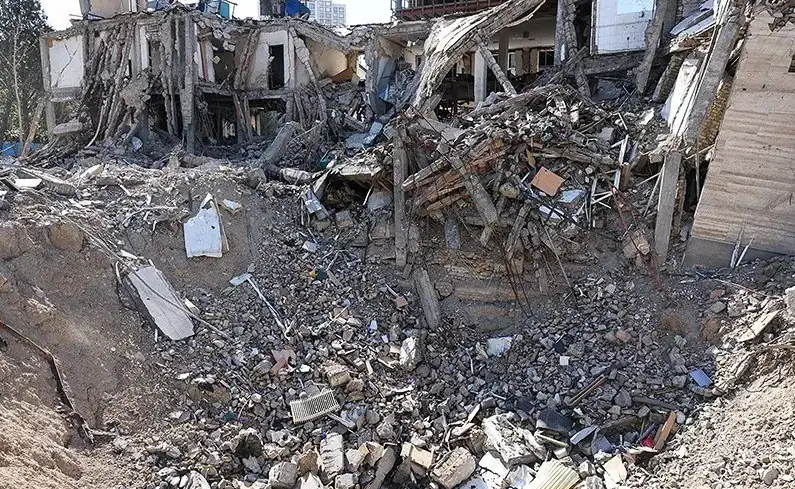
In the early hours of Wednesday morning, U.S. forces reportedly launched thirteen missiles against a military installation in Bampur, targeting barracks used by the Iranian Army’s Ground Forces.
Official sources report that at least five conscript soldiers were killed and many others injured.
Under international humanitarian law, conscripts serving in the armed forces are generally considered members of the armed forces and therefore lawful military objectives. However, compulsory military service in Iran leaves many young men with little choice but to serve.
Military service is effectively mandatory for most Iranian men and is a prerequisite for obtaining employment, registering property, marrying, and exercising many basic civil rights. Consequently, the deaths of these young conscripts have generated widespread public grief, reflecting the perception that they were individuals with limited agency rather than professional soldiers who voluntarily enlisted.
Civilian Casualties and Livelihoods
At the time of writing, at least thirty civilians have reportedly been killed during U.S. attacks on southern Iran.
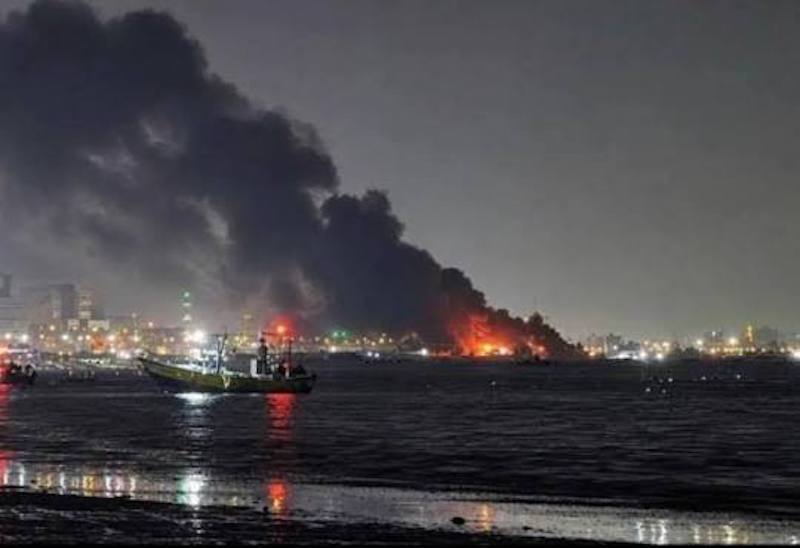
The bombardment has also affected civilian ports, destroying numerous fishing boats and traditional vessels that serve as the primary source of income for many coastal communities. Two young fishermen were also reportedly killed along the coast of Hormozgan. The destruction of these livelihoods compounds the humanitarian consequences of the conflict, particularly for already economically vulnerable populations.
Femena strongly condemns the continued escalation of military aggression by the US against Iran and expresses grave concern over the growing humanitarian impact of the conflict on Iranian civilians. The military strikes against Iran—launched in June 2025, February 2026, and most recently in July 2026, while the country was actively engaged in negotiations—constitute a grave violation of international law. While the U.S. and Israel claim these attacks to be preemptive, it is abundantly clear to observers that Iran posed no imminent threat to either nation or to any other country in the region. This war was and continues to be an illegal war of choice.
Femena calls on all parties to the conflict to fully comply with international humanitarian law, including the principles of distinction, proportionality, and precaution. Civilian populations and civilian infrastructure—including electricity networks, water facilities, food storage infrastructure, telecommunications systems, and objects indispensable to civilian survival—must be protected.
The people of Iran have endured decades of political repression, economic hardship, and the devastating consequences of international sanctions. They should not bear the additional burden of escalating armed conflict.
Femena calls for an immediate cessation of hostilities, the protection of civilians, and renewed diplomatic efforts aimed at preventing further loss of life and the long-term destruction of infrastructure essential to the well-being of Iran’s population.