

Since 28 February and the onset of Israeli and U.S. attacks on Iran, the country’s vital civilian infrastructure has been extensively targeted. Throughout this period, Donald Trump repeatedly threatened to escalate these strikes, going so far as to openly warn of the destruction of an entire civilization.
In a post on Truth Social dated April 7, Trump wrote that “a whole civilization will die tonight, never to be brought back again.” Earlier, on Sunday, April 5, he had given Iranian authorities a deadline until the end of Tuesday to agree to a deal, with the stated aim of compelling Tehran to reopen the Strait of Hormuz, a critical artery for global oil transit. This rhetoric is not unprecedented; Trump has previously threatened to target Iran’s infrastructure and has even claimed he could send the country back to “the Stone Age” should it refuse to comply.
A military intervention that began under the pretext of ‘saving the Iranian people’ and ‘establishing democracy’ has, in practice, evolved into a direct threat to the lives and everyday existence of Iran’s civilian population. The bombing of universities; the attack on the Pasteur Institute of Tehran, a facility that neither stored missiles nor produced missile components; strikes on civilian airports, ports, and pharmaceutical factories; the targeting of meteorological installations; the destruction of the B1 bridge in Karaj; the launching of a missile at a school in Minab, killing dozens of students; and attacks on steel and petrochemical industriesو none of these actions can be interpreted as anything other than the deliberate targeting of the lives and livelihood Iranian people.
Under international law, the intentional or indiscriminate targeting of civilians, as well as civilian infrastructure, including energy systems, transportation networks, ports, and airports, when carried out in violation of the principles of distinction, proportionality, and military necessity, constitutes a war crime. Erika Guevara-Rosas, Senior Director for Research, Advocacy, Policy and Campaigns at Amnesty International, in condemning Donald Trump’s threats, stated : ‘By threatening such strikes, the USA is effectively indicating its willingness to plunge an entire country into darkness, and to potentially deprive its people of their human rights to life, water, food, healthcare and adequate standard of living, and to subject them to severe pain and suffering. The decision to not proceed with such attacks must be based on the USA’s obligations under international humanitarian law to avoid civilian harm -not the outcome of political negotiations.
Attacks on the Everyday Life of Iranians: Examples of Targeted Infrastructure
Over the course of the 40-day war, more than 300 medical centers, emergency bases, and hospitals were subjected to attack, with over 12 hospitals completely destroyed and rendered inoperable. According to Shargh newspaper, more than 25 members of the healthcare workforce, including physicians, pharmacists, nurses, and emergency technicians, were killed while carrying out their duties.
At the same time, the targeting of several pharmaceutical manufacturing plants, as well as warehouses storing essential medicines and infant formula in various cities, along with the destruction of the Pasteur Institute and Tofigh Daru pharmaceutical factory (a research and engineering company that develops and produces active pharmaceutical ingredients “in the anticancer, narcotics, cardiovascular to immunomodulatory segments), raised serious concerns about disruptions to the production and supply chain of medicines and medical equipment. The spokesperson for the Food and Drug Organization stated that during the recent conflict, approximately 30 pharmaceutical and medical equipment production units sustained partial or total damage. In one instance, a factory producing hospital and operating room supplies, located near designated targets was so severely damaged that its production line was temporarily shut down. The Minister of Health of the Islamic Republic of Iran stated on Tuesday, 21 April that recent U.S. and Israeli attacks had inflicted extensive damage on the country’s health sector. According to preliminary estimates, the Pasteur Institute of Iran alone sustained approximately 3 trillion tomans in damages, a figure that includes destruction to buildings, equipment, and laboratory facilities.
Scientific, research, and academic institutions affiliated with the Ministry of Science were likewise not spared from missile strikes. Among those targeted were some of the country’s most prominent universities, including Shahid Beheshti University, Iran University of Science and Technology, and Sharif University of Technology in Tehran. According to the Ministry’s Deputy for Administrative, Financial, and Support Affairs, preliminary estimates place the damage inflicted on these institutions at over 4 trillion tomans, resulting from attacks on 154 academic sites across 21 universities, institutes, and higher education and research centers under the Ministry’s authority.
On 18 March, following a missile strike by Israeli and U.S. forces, parts of the South Pars gas facilities in Asaluyeh were hit, specifically Phases 3, 4, 5, and 6 of the field. The South Pars gas field (known in Qatar as the North Dome) is the largest gas field in the world and is widely regarded as the backbone of Iran’s energy sector, a resource upon which the country’s economic vitality, industrial capacity, and even social stability depend. Approximately 70 to 75 percent of Iran’s natural gas supply is sourced from this field, and in recent years its daily production has reached a record level of around 730 million cubic meters.
In early April 2026, these U.S.-Israeli attacks entered an unprecedented phase. On April 4, joint U.S. and Israeli forces carried out airstrikes on the Mahshahr Special Petrochemical Zone in Khuzestan Province, targeting several major production facilities. Reports indicate that “Fajr Petrochemical Complexes 1 and 2, Rejal Petrochemical, and Amir Kabir Petrochemical” were hit, with operations in some cases halted or significantly disrupted. The escalation continued, and just two days later, on April 6, 2026, the Israeli military announced that it had delivered a “powerful strike” against one of Iran’s largest petrochemical complexes in Asaluyeh, in the southern Bushehr Province.
missile strike on the Mahshahr Special Economic Zone was carried out on the first working day following the Nowruz holidays in Iran, targeting three critical components of the area: Fajr Energy Units 1 and 2, which supply water and electricity to the entire economic zone; infrastructure responsible for providing water and power to Bandar Imam and Razi Petrochemical; and part of the Karoon Petrochemical complex.
Bandar Imam Petrochemical Complex, the largest petrochemical facility in both the special economic zone and Iran as a whole, is often referred to as the “mother” complex. It employs approximately 12,000 workers and produces a wide range of outputs, including petroleum derivatives, gasoline products, polymer derivatives, and rubber, while also supplying fuel to several petrochemical plants in Mahshahr, such as the Amir Kabir polymer unit. According to workers in Mahshahr’s petrochemical sector, after the outbreak of the war only 20 to 30 percent of the workforce remained physically present at their jobs. On Saturday, 4 April, a directive from the special economic zone instructed that 30 percent of personnel should continue in-person work, with companies permitted to increase this number if necessary. On the morning of the attack, workers who were in open areas fled in panic at the sound of the first explosion, climbing over fences and running toward the sea and nearby desert areas to get out of danger. The situation continued for at least 40 minutes, during which the sound of fighter jets was constantly heard overhead.
Attacks on refineries and petrochemical facilities are not merely the destruction of a country’s energy and fuel network; they amount to the paralysis of everyday life for millions of Iranians. Despite years of severe sanctions, Iranian engineers in the oil and gas sector have, through sustained effort and sacrifice, managed over decades to build and operate gas refineries and petrochemical plants. Striking these facilities undermines not only infrastructure, but the very systems that sustain daily living. Similarly, attacks on steel complexes are not simply the shutdown of industrial units; they bring entire production chains to a halt, affecting construction, automobile manufacturing, household appliances, oil and gas pipelines, and even medical equipment. The result is cascading unemployment for tens of thousands of workers.
As for the financial damage caused by these attacks, no comprehensive or official figures have yet been released. However, in one reported case, according to The Wall Street Journal, strikes on seven airports, the destruction of 20 aircraft, and the grounding of 40 passenger planes during the 40-day conflict inflicted losses amounting to tens of trillions of tomans on the country’s aviation industry.
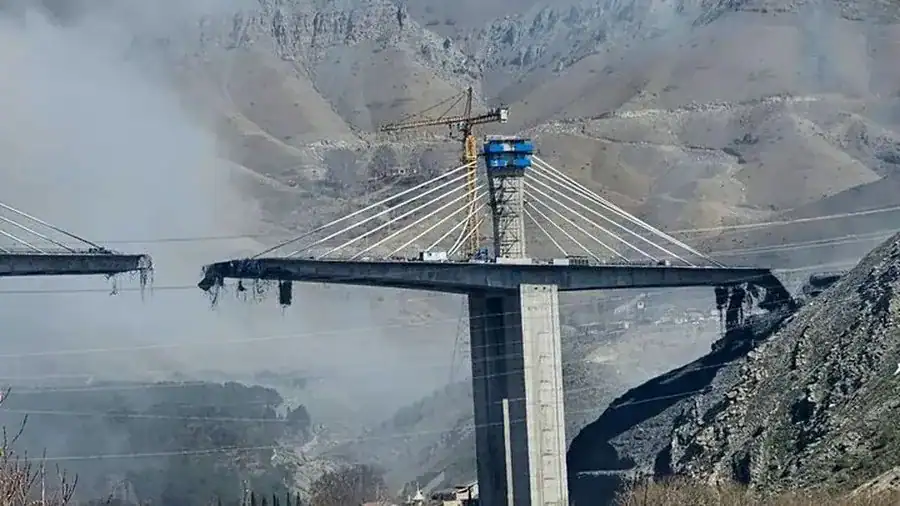
One of the country’s civilian infrastructure projects targeted in the bombings was the B1 bridge on the Karaj Western Bypass freeway, a project that had not yet been opened to the public and carried no traffic at the time. Despite this, it was struck by U.S.-Israeli forces, resulting in the deaths of several civilian citizens. On 2 April 2026, the bridge sustained severe damage in two rounds of U.S. airstrikes. The attack killed eight people and injured 95 others. Donald Trump claimed responsibility for the strike on the bridge. What follows are two reports by women journalists inside Iran. The first is an account of two of the victims of the attack on the Karaj B1 bridge, written by Elnaz Mohammadi, a women’s rights defender. This report was originally published by Khabaronline. The second report, written by Elnaz Mohammadi and Zahra Jafarzadeh and published in Shargh newspaper, focuses on the attack on the Mahshahr petrochemical complex.
As a human rights organization, we have translated and are publishing these reports in an effort to document and bear witness to the destruction and suffering this war has inflicted, particularly on innocent civilians. Our aim is to amplify the voices and perspectives of rights defenders within the country, as well as those most directly affected by this horrific crisis, who continue to endure the devastating consequences of attacks on civilians and ongoing violations of humanitarian norms. We will continue to publish and document similar voices and perspectives emerging from Iran.
The Account of a Mother and Son Killed and Injured in the U.S. Attack on Karaj’s B1 Bridge
Elnaz Mohammadi/Khabaronline: Nahid Amiri and her son, Ashkan Bayati, left their home near the B1 Bridge that day in a newly purchased car, looking for a shaded spot beneath the trees along the Chalus road to sit and observe the traditional Sizdah Be-dar when American bombers tore them apart forever. The first bomb, following threats by the U.S. President Donald Trump to target Iran’s infrastructure, an operation he claimed was carried out by American fighter jets, struck the B1 Bridge at around 2 p.m. on the thirteenth day of Farvardin. At that time, many families and individuals were spending the holiday along the Bilqan River and in the orchards of the Chalus region. Colorful camping tents, later visible in the first images shared by the public, dotted the area, while men, women, and children either fled in panic or, in some cases, sought shelter behind them. Nahid had separated from her husband years earlier, and Ashkan more recently. The two had been living together in a modest two-person household. The 13th of Farvardin 1405 would be the last day they spent together. That day, they had been invited to a relative’s home, but decided that even for ten minutes, they should observe the tradition of Sizdah Be-dar and ward off its bad omen.
Soon after, Nahid quickly packed up their outing: a simple picnic mat, a thermos of tea, and some nuts and fruit. Their new car, purchased only a few days earlier and waiting for them in the alley, became the last place where mother and son were together. On a road near the orchards at the entrance to Chalus, Ashkan was still driving when the first bomb struck, tearing through the B1 Bridge and then hitting several vehicles a short distance ahead of theirs. Nahid and Ashkan had no way forward or back. They got out to see what had happened to the occupants of those cars, and what they saw pushed them further into shock. The vehicle directly in front of them, only a few meters away, had been completely destroyed, and all three people inside had been killed. Watching this horrific scene made them run back even faster. They returned and took refuge in their own car again, but fear did not leave them. The new car began displaying an alarm security warning and would not start. They were still unfamiliar with all the features of the new vehicle and did not know how to respond to the security alert, which had likely been triggered by the initial explosion. No matter how hard they tried, it was useless. In those terrifying seconds, what exactly happened is something Ashkan struggles to recall. All he remembers is trying desperately to move the car and escape the explosions amid the heavy traffic of that day, when further bombs suddenly fell from the sky.
The subsequent attacks arrived around 5:30 p.m. With at least four bombs, they tore through the bridge, known as the highest in the Middle East, and turned that Friday afternoon of the 13th of Farvardin into something entirely unlike any other year. This occurred even as emergency response teams had arrived following the 2 p.m. strike, and according to eyewitnesses and the injured, a large number of wounded and dead were still lying on the ground. That day’s victims fell into three categories: passing travelers, residents of nearby homes, and people who had come to the area to spend the Sizdah Bedar holiday. Residents of the surrounding areas say they were left without water and electricity for about five hours that day. Many homes in the Baghestan and Azimieh districts of Karaj were damaged, and the fear of that day has not left them since.
Nahid was among the first group of victims, and she was killed instantly in the second strike, her fifty-year life ending before her son’s eyes. Her body was torn apart, with her remains scattered, her arms on one side, her legs on another, and her face severely shattered. The last image Ashkan carries of his mother is that fragmented scene. He is now lying in a hospital bed, with severe injuries to his arms and legs, trying to piece together his memories of that day. Nahid Amiri and her son, Ashkan Bayati, were originally from Kermanshah. Nahid was born and raised in the village of Kanduleh in Kermanshah, and on the thirteenth of Farvardin 1405, while on her way to a place of greenery and water to symbolically “ward off the bad luck of the thirteenth,” death overtook her.
The B1 Bridge is located in the Bilqan River area, at the beginning of the Chalus Road (Janbazan Boulevard), spanning the Karaj River. It is situated approximately four kilometers from the city of Karaj, near the Azimieh district. The bridge is 1,050 meters long and 136 meters high. This bridge was constructed after the resumption of the highway later named after Qasem Soleimani in 2023, following a suspension of the project that had lasted since 2016 after the initial opening of the freeway. This highway, also known as the Karaj Northern Bypass, extends for 18 kilometers and includes 21 bridges and 63 culverts. It begins at the western end of the Hemmat-Karaj freeway and connects to the Karaj-Qazvin freeway in the Kamalshahr area of Karaj. The B1 Bridge is the highest structure in this project, with its foundations set across the valleys and riverbeds of Karaj.
Attack on Mahshahr petrochemical complex: The Shift That Never Ended
Elnaz Mohammadi, Zahra Jafarzadeh/Shargh: On the day when the sound of Israel-U.S. fighter jets was heard even before their shadow fell over homes, streets, shops, and eventually the Mahshahr Special Economic Zone in southwestern Iran, Mehdi Veysitabari, just as he had for the past fourteen years was busy inspecting and repairing equipment. He was at The Persian Gulf Fajr Energy, working alongside his colleagues, who during the days of war continued to work with heightened anxiety and in smaller numbers than usual.
On Saturday, 4 April 2025, the 42-year-old Mehdi was moving quietly among the machines in his work uniform, just as he always did, reserved, meticulous, and focused, when the missiles struck. This is how his friends remember him. Anoush Shapouri, who had been his classmate from the first year of high school through to the end of their undergraduate studies at Islamic Azad University of Ahvaz, describes him in three words: quiet, respectful, and deeply passionate about mechanical engineering.
Anoush and Mehdi studied mechanical engineering together at the Azad University of Ahvaz. Soon after graduating, Mehdi began working in the petrochemical complexes of Mahshahr, while Anoush joined Khuzestan Steel Company. The two, both natives of Ahvaz who grew up in the Bahonar neighborhood, were separated by their workplaces. On the day the Mahshahr Special Economic Zone was bombed, one of them learned of the other’s death through a Khuzestan news channel on the ‘Baleh’ messaging app. His name appeared alongside five others: Mohammad Torabi, Abuzar Reyhani, Ali Mambini, Hossein Hashempour, and Ali Emami, who together made up the final death toll reported for that day.
What Happened in Mahshahr?
The missile attack on the Mahshahr Special Economic Zone took place on the first working day after the Nowruz holidays in Iran, targeting three key components of the area: Fajr Energy Units 1 and 2, which supply water and electricity to the entire zone; the infrastructure providing water and power to Bandar Imam and Razi Petrochemical; and part of the Karun Petrochemical complex. The resulting blackout has continued, with only a small portion of operations restored using diesel-powered generators.
Other companies, including Marun, Amir Kabir, and Takht-e Jamshid, were also affected. By the end of the day, the attacks had left six people dead and 170 injured. In the days that followed, clinics and hospitals, particularly those in the Ba’that residential complex, where many petrochemical workers reside, were overwhelmed with the wounded. Many had been thrown by the force of the blasts and, despite their injuries, managed to make their way out of the facilities while bleeding.
The process of assessing the damage has not yet begun, and it remains unclear when the area will return to full production. The Mahshahr Special Economic Zone lies between the Sarbandar–Mahshahr road and has a dedicated access route. After passing through the security gate, the industrial sites begin: to the right are the facilities of the special economic zone, and to the left the Tondguyan power plant, followed by Bandar Imam Petrochemical. The zone hosts around 25 active petrochemical plants, many of the most significant of which were targeted in the Saturday attacks.
Mohammad had returned to work that day after two days off. He was informed that a unit was being brought back online, and as a ventilation technician, he was required to be present. At around 10:30 a.m., the first explosion echoed across Mahshahr, and the phones of everyone at the facility began ringing. Families, alarmed, were calling to find out whether their loved ones, working in Iran’s largest petrochemical complex, were in danger, as fighter jets roared low overhead.
Mohammad’s daughter called him as soon as the first blast was heard; the sound had reached their home, shaking the windows and doors. At first, Mohammad had only heard the explosion from a distance and assumed their facility was not the target. But before the call even ended, the second and third blasts followed. His daughter called again, terrified. Mohammad asked, “Where is your mother? Go somewhere she isn’t,” and then added, “They’re hitting us.”
In the moments of impact, when the whistling sound of incoming missiles is heard just before they strike, there is a brief suspension between life and death. Something surges through the body, an indescribable state unlike anything else. Mohammad’s family felt it that day, just as he did alongside nearly 200 of his colleagues working in the ventilation unit. Under relentless missile fire, they ran toward the perimeter fences, trying to reach the large industrial pipelines nearby, the only shelter they could find.
Amid the chaos, Mohammad watched his coworkers being lifted and thrown aside by the force of the blasts. He tried to keep his eyes open, repeating to himself, “You will not die today.” But missile after missile tore through the sky, landing among the workers. In the end, Mohammad and several of his colleagues managed to reach the large pipes, where they lay for hours, with bodies burning with heat and shock beneath their work clothes.
That day, no one was killed at the Bandar Imam Petrochemical Complex, but there were many injuries. The images of workers being thrown by the blasts remain vivid in Mohammad’s fragmented memory. He describes that day in a single word: “hell.” He says that although he was not physically harmed, those scenes have never left him: Fighter jets were passing overhead, and everyone was frozen, not knowing what to do. Workers were clinging to pickup trucks and trailers, trying to find a way out. My colleagues and I were at the far end of the facility, and no vehicle could reach us. After we got out of the pipes, we made our way on foot to Line One to find transport. My leg still hurts because we ran so much, we kept falling to the ground, covering our heads with our hands. I had a severe headache. I saw my friends and long-time co-workers being thrown, each landing with injured, bleeding limbs. Our petrochemical complex has a well-equipped ambulance and clinic, but the intensity of the explosions was so great that ambulances couldn’t reach the power plant, which increased the number of injured. That day was truly like hell.”
At the Bandar Imam Petrochemical Complex, around 500 women are employed, the largest number of women workers among all companies in the Mahshahr Special Economic Zone. Parvaneh, one of them, works in the laboratory at Bandar Imam, though she was not at work on the day of the bombing. Since the start of the war, women administrative staff had been relocated to the Ba’that residential complex, but some still went to work in person.
According to Parvaneh and other employees, the Bandar Imam power plant was completely damaged. The utility unit, located directly opposite the olefin unit, was hit in the bombardment, and shrapnel also struck the olefin section. Workers say they were fortunate that the units were not operational at the time; otherwise, the scale of fire and explosions would have caused far greater casualties. Major storage tanks, such as those containing LPG (liquefied petroleum gas), had been emptied, had they been full, the blast radius could have extended for kilometers and polluted the city. Workers and staff across all the petrochemical plants targeted that day share a common sentiment: “We saw hell with our own eyes.” Workers and staff across all the petrochemical plants targeted that day share a common sentiment: “We saw hell with our own eyes.” One employee, identified as Mr. “T,” recalls counting the explosions as they happened; later, he read in the media that missiles had struck the area 28 times.
After the shutdown of the petrochemical companies, only shift workers, HSE (health, safety, and environment) personnel, and security staff remain present in the area, while other administrative employees continue their work remotely. The major concern, however, is the potential loss of jobs for workers and staff across the region. Mr. “T” says that for now, there is no talk of layoffs: “But until Fajr Energy returns to service, no company in the zone can operate, and at the moment it is not clear when operations will resume.”
Among the petrochemical companies in the region, the largest workforces belong to Bandar Imam, Marun, Razi, Fajr Energy, and Amir Kabir Petrochemical complexes. One worker at Bandar Imam Petrochemical says the company employs three types of labor: contract, permanent, and daily workers, and it is the daily workers who have been hit the hardest. Even for other employees, full salaries have not yet been paid; only advance payments have been issued. This is happening while many employment contracts are valid only until June, leaving workers uncertain about what lies ahead.
Dervishi, head of the Khuzestan Provincial Workers’ House, told Shargh that from the beginning of the war up to 11–12 Farvardin, excluding workers in the Mahshahr petrochemical industries, nearly 11,699 people had lost their jobs across the province. In addition, 27 workplaces across industrial sectors, agriculture, small industries, steel, and shipbuilding were affected, with six fatalities and 70 injuries recorded in the labor sector. According to him, these figures do not include construction workers, as it is not possible for the Workers’ House to accurately assess their situation; however, they too have effectively lost employment due to the war. Dervishi explains that there are no independent labor unions in the Mahshahr Special Economic Zone, which makes tracking changes in employment contracts and job losses in the region beyond the capacity of existing institutions. He had previously told ILNA that around 100,000 workers had become unemployed as a result of the war.