

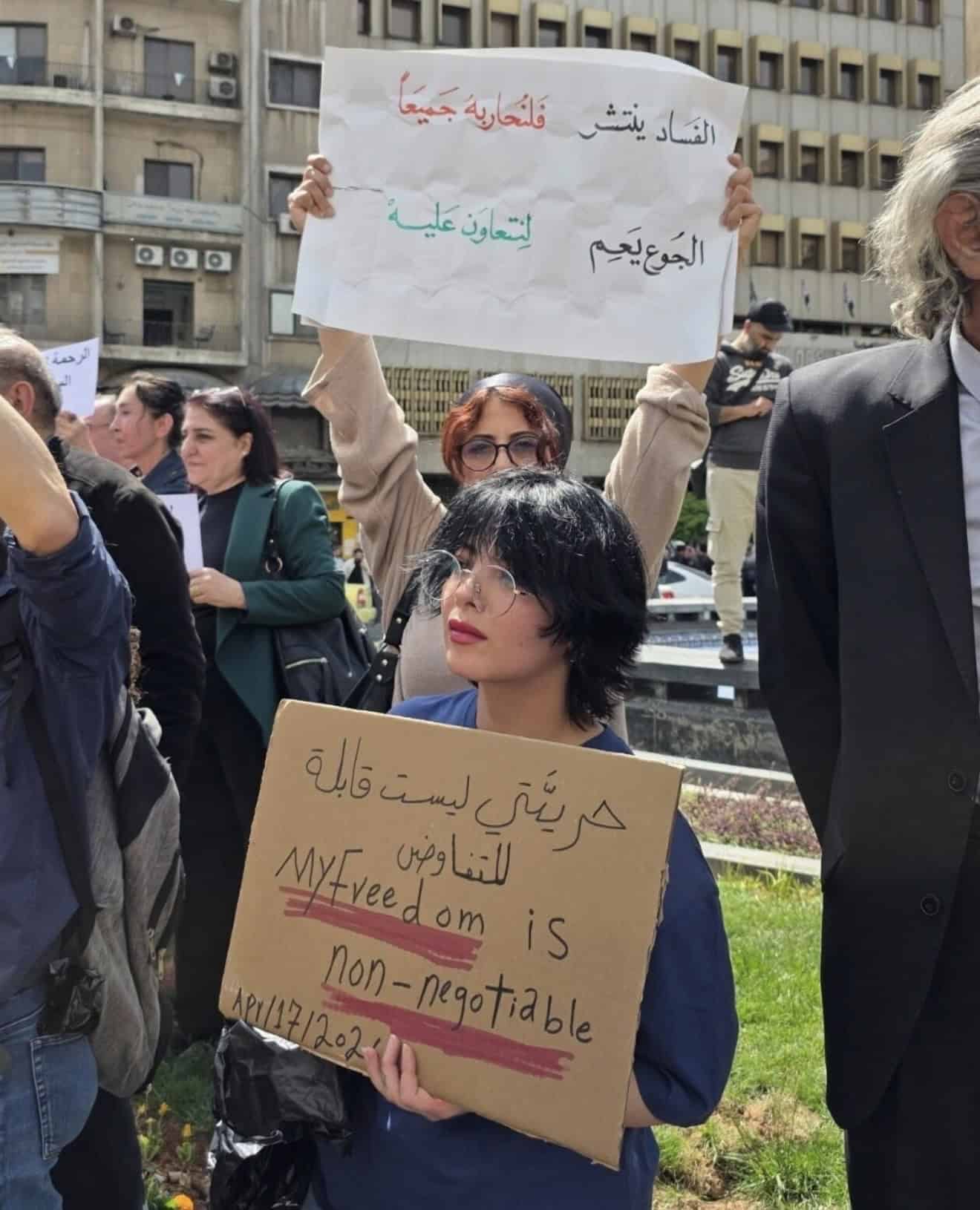
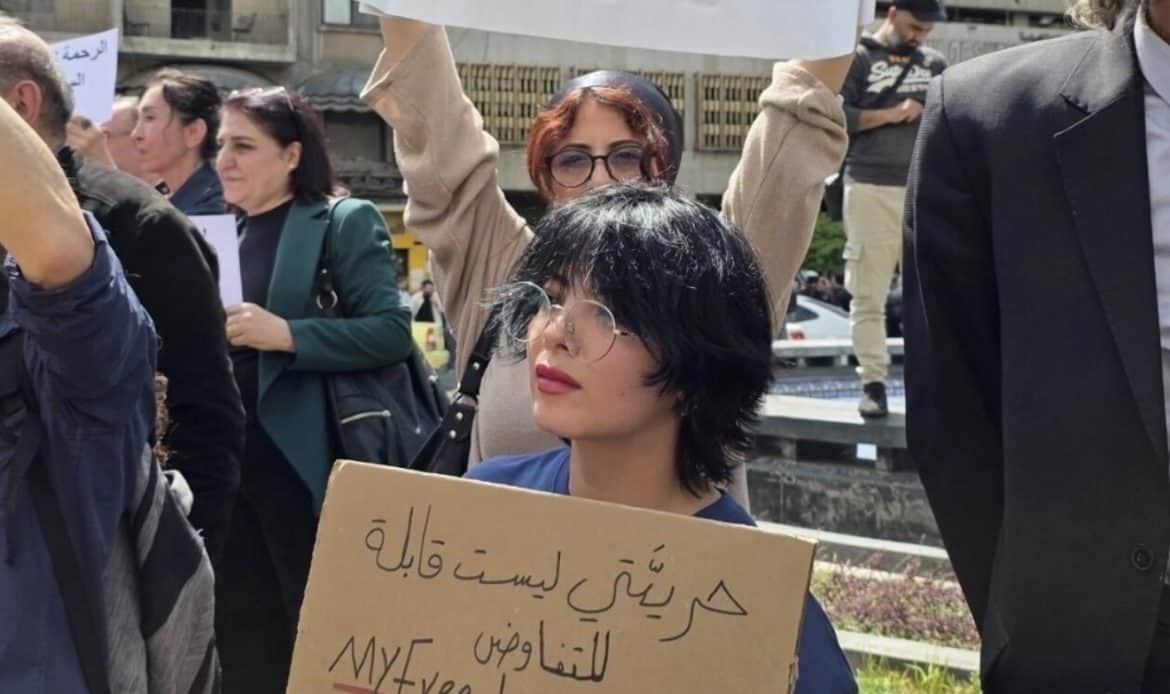
Femena expresses deep concern over the events that took place in Damascus on 17 April 2026, a date of profound historical significance for Syrians marking independence from colonial rule. On this day, citizens gathered in what became known as the “Law and Dignity” sit-in, a peaceful assembly organized to voice legitimate demands for improved living conditions, as well as meaningful political and economic reforms.
The assembly brought together a diverse group of participants, including women, men, civil society activists, and women human rights defenders, demonstrating a shared commitment to dignity, justice, and a more equitable future. Protesters called for improved economic conditions, respect for rights and freedoms, and broader reforms aimed at ensuring justice and the rule of law. The participation of women in particular reflects their ongoing and essential role in shaping public life, including their engagement in civic spaces, community leadership, and public decision-making processes, as well as their advocacy for rights despite persistent risks.
Participants expressed their demands peacefully, emphasizing inclusive visions for Syria and calling for dignity and equal rights. However, the gathering was met by counter-demonstrations from pro-government supporters, leading to tensions and, in some cases, acts of harassment and violence against protesters. Reports indicate that some demonstrators were physically assaulted and intimidated in an apparent attempt to silence their voices, including incidents targeting individuals documenting the protest.
Observers and civil society voices have also raised concerns about the emergence of informal groups and individuals who seek to silence dissent and intimidate those expressing alternative views. Some of these actors have promoted exclusionary narratives about Syria’s identity that risk marginalizing the country’s diverse communities. In a context where counter-demonstrators have used religiously framed slogans and symbols while confronting protesters, such dynamics heighten fears of growing polarization and shrinking civic space. These developments echo patterns that undermine peaceful coexistence and increase risks for activists and women human rights defenders.
Women human rights defenders and activists remain especially vulnerable in such contexts, facing both targeted violence and systemic barriers.
While it is noted that security forces eventually intervened to separate demonstrators and prevent further escalation, concerns remain regarding the failure to prevent attacks against a peaceful assembly from the outset. This raises serious questions about the adequate protection of the right to peaceful assembly.
Femena calls on Syrian authorities to uphold their responsibility to protect all citizens without discrimination, ensure accountability for attacks against peaceful protesters, and create an enabling environment where women and all members of society can safely and freely express their views. We further urge all stakeholders to foster a culture of dialogue and nonviolence, particularly at a time when citizens are calling for urgent reforms.
On a day that symbolizes freedom and independence, the voices of the people must not be met with violence, but with respect, protection, and meaningful engagement.