

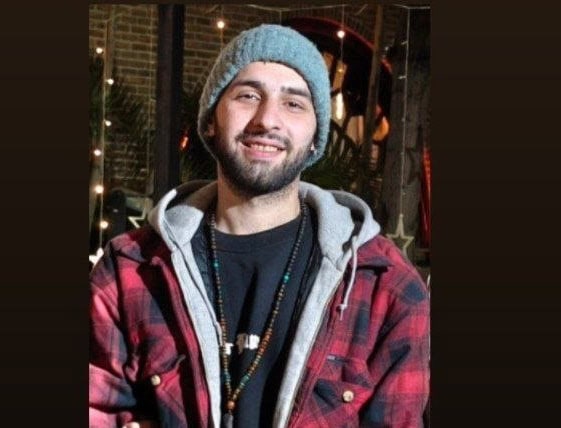
Ali (Arian) Fahim, a 23-year-old protester arrested during the January demonstrations in Tehran, was executed today. He had been detained on January 8. Fahim was sentenced to death by Branch 15 of the Tehran Revolutionary Court, alongside six other defendants, on charges of setting fire to a Basij base. His death sentence was subsequently upheld in full by the Supreme Court.
Prior to his execution, Amirhossein Hatami, Mohammad Amin Biglari, and Shahin Vahedparast—co-defendants in the same case—had also been executed.
The accelerating implementation of death sentences against protesters arrested during the January demonstrations—at a time when Iran has been under a near-total international internet shutdown for approximately forty days, severely restricting access to information about judicial proceedings—has heightened concerns among human rights organizations that further executions may be imminent.
This escalation of internal repression is taking place amid ongoing large-scale military attacks across Iran by the United States and Israel. The President of the United States has also threatened that, starting Tuesday, attacks on bridges and electrical infrastructure in Iran will begin.
In this context, the Iranian judiciary, in an official statement regarding the execution of Ali Fahim, described him as an “enemy element” who had participated in unrest during the January 2025 events and had “paved the way” for foreign military attacks against Iran. Such narratives raise serious concerns about the politicization of the judiciary and the use of capital punishment as a tool to suppress dissent.
Femena once again calls on the Iranian authorities to immediately halt the execution of political protesters and to ensure fair, transparent, and independent judicial proceedings for all those detained during the January demonstrations, including full access to legal counsel of their choosing.
The intensification of internal repression, combined with the continued use of the death penalty against protesters, will not resolve the current crisis in the country. Rather, it risks deepening societal divisions and further undermining public trust.
Immediate action is required to halt ongoing executions, ensure accountability for due process violations, and protect the lives of those currently at risk.