

Between the publication of our second and third reports, while thousands of individuals arrested during the January protests remained detained in uncertain and opaque conditions, war erupted. In the early hours of Saturday, February 28, the United States and Israel—despite ongoing negotiations between the US and Iran—launched extensive airstrikes on Tehran, followed by attacks on numerous other cities across the country.
The strikes reportedly targeted military sites, local police stations, and key government buildings, including the Assembly of Experts and the residence of the Supreme Leader of the Islamic Republic.
On the first day of the attacks, the Supreme Leader, Ayatollah Ali Khamenei, along with several senior commanders of the Islamic Revolutionary Guard Corps (IRGC), was killed. His death triggered sharply divided reactions across Iranian society. While many Iranians publicly celebrated the news, supporters of the Islamic Republic, gathered in large numbers to mourn.
This stark polarization—public expressions of joy on one side and grief and anger on the other—has further deepened social fractures within the country. Reports indicate that threatening text messages have been sent to citizens, warning that anyone taking to the streets in opposition to the government would be treated as an agent or soldier of Israel and the United States and would face severe consequences. Supporters of the government, angered by the killing of their leader and by visible public celebrations, appear poised to retaliate against perceived opponents.
According to figures released thus far, more than 1,000 people have been killed in the U.S. and Israeli attacks. On the first day alone, in addition to senior officials, a primary school in Minab, in southern Iran, was struck. The attack killed 165 elementary school children. The burial ceremonies for these children have become some of the most harrowing and tragic images of the war.
Within hours of the initial strikes, authorities imposed widespread internet disruptions, severely restricting communication between those inside Iran and the outside world. Amid reported cyberattacks—including the hacking of state television and several news agencies—international internet access was completely shut down. More than 100 hours later, the blackout continues.
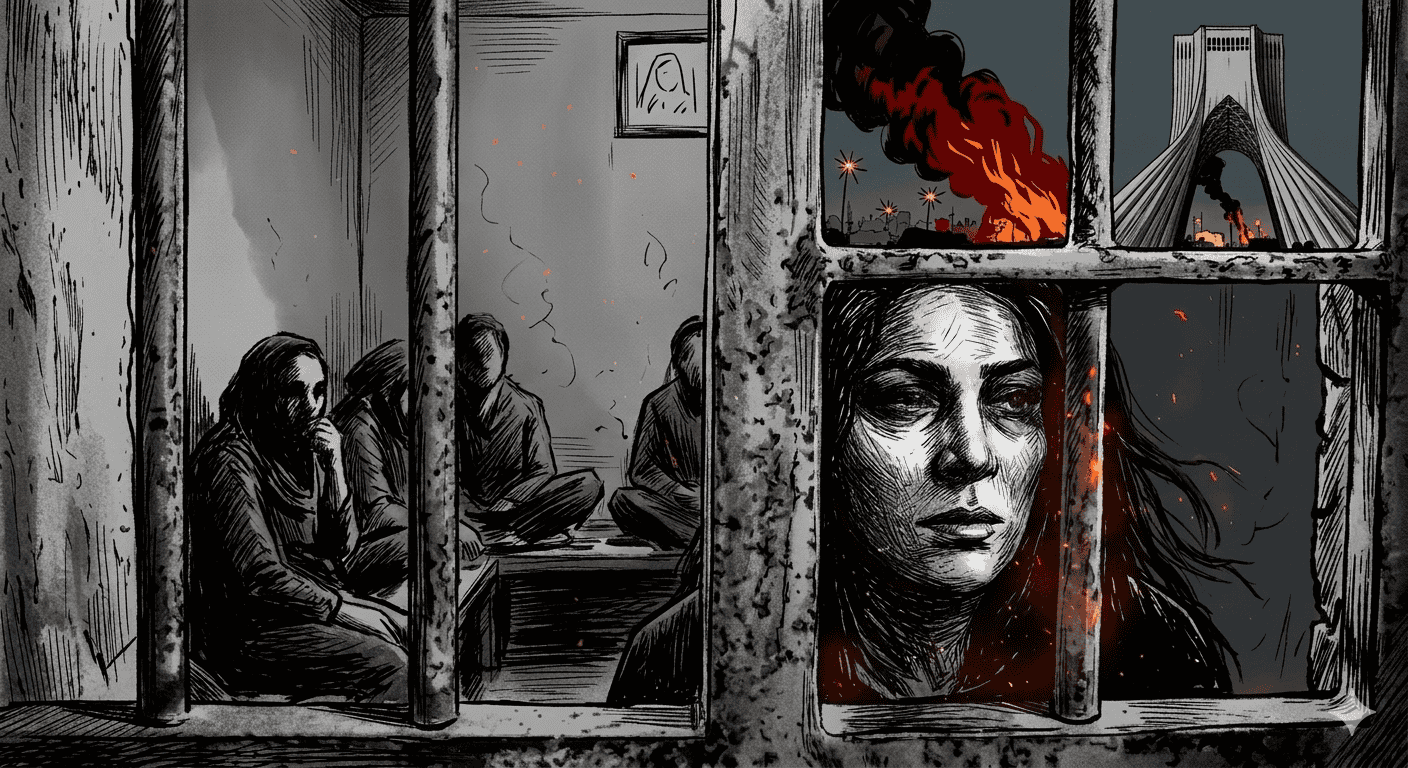
Serious concerns have also emerged regarding the safety of detainees, including the thousands arrested during the January protests. Following an Israeli strike on Evin Prison during the twelve-day conflict in June 2025, fears of renewed attacks on prisons or nearby facilities have intensified. On the third day of the current war, a building near Greater Tehran Prison, which houses male prisoners, was struck, causing damage that reportedly extended to parts of the prison itself.
Repeated strikes in the Evin district of Tehran—where the notorious Evin Prison is located—have placed detainees at significant risk. Independent sources report that prisoners have attempted to protect themselves from blast waves by taping windows and taking other improvised measures inside prison wards. Additional reports indicate that political prisoners in Evin Prison have been informed that they may be transferred to Qom Prison.
In an interview with Shargh newspaper, lawyer Payam Dorafshan addressed the situation of prisoners and the possibility of granting them temporary leave. He stated:
“From a legal standpoint, prisoners fall into two completely different categories. Those who have received final convictions are subject to the regulations of the Prisons Organization, and the possibility of granting them temporary leave or certain facilities exists, subject to the approval of the supervising judge and within established regulations.
In contrast, individuals held in pre-trial detention—whose cases have not yet reached the stage of a final verdict—are outside the authority of prison administration. Any decision regarding their status lies solely with the authority that issued the detention order.
This legal distinction has effectively eliminated the possibility of making uniform decisions for all prisoners under emergency conditions.”
With judicial institutions, courts, and prosecutors’ offices effectively closed due to the war, the legal status and safety of thousands of protest detainees remain uncertain.
According to Payam Dorafshan, “Buildings such as the Tehran Revolutionary Court and several prosecutor’s offices located in the same area have experienced serious disruptions to their operations. As a result, the judicial process has been significantly interrupted.”
Some protesters who had previously been sentenced to death now face an acute risk that their sentences could be carried out. In recent days, activists and human rights organizations have repeatedly warned about the safety and lives of detainees and have called for their immediate release.
The present report, which is Femena’s third report on women arrested during the January protests, is released on International Women’s Day, a day observed around the world to commemorate the historic struggles of women for equality, freedom, and human dignity. The experiences of the women documented in this report are part of a much longer history of women’s resistance and collective action in Iran. From the earliest organized initiatives of women during the Constitutional Revolution, when women mobilized to demand access to education and greater participation in social and public life, to their prominent presence in subsequent social and political movements, Iranian women have consistently stood at the forefront of the struggle for freedom and justice.
Femena’s findings indicate that Many of the women detained during the January protests had prior records of arrest and prosecution, including during the Woman, Life, Freedom protests in 2022. This pattern underscores a critical reality: repression, imprisonment, and state violence have repeatedly failed to silence women’s demands for freedom or to halt their continued mobilization. These women are now imprisoned amid war, airstrikes, and ongoing hostilities—their lives are at risk both from their jailers and from the bombs falling around them.
Read Full Report: