

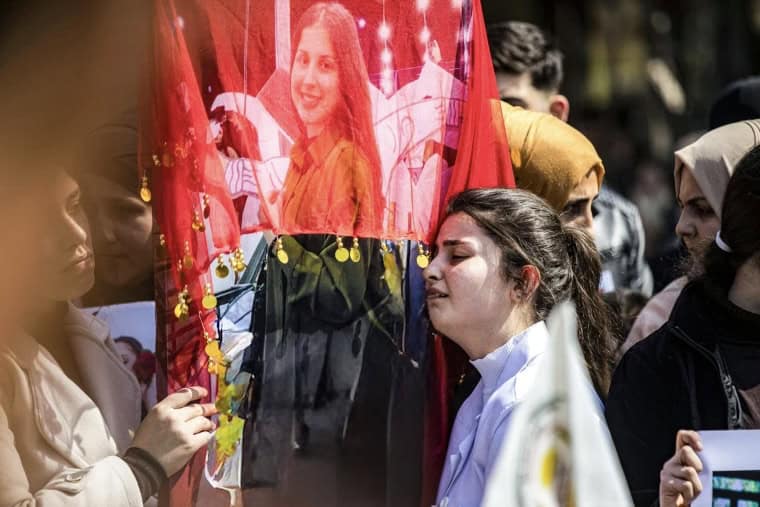
March 6 marks the first anniversary of the coastal massacres that devastated Alawite communities in Syria, leaving deep scars on families, and particularly on women and children. What began as armed groups claiming to target “remnants of the regime” quickly escalated into widespread attacks on civilians and sectarian mass killings, where entire families were killed inside their homes and whole villages emptied in fear. The most intense, sustained violence occurred between March 6 and 13, 2025, when coordinated attacks took place in more than 40 towns and villages in the coastal region, resulting in the killing of at least 1,400 Alawite civilians, according to documented human rights investigations, who also reported that the attacks involved identity‑based targeting, the burning of homes, and the disappearance of women whose fate remains unknown.
Responsibility for the attacks has been attributed to HTS‑led forces and Turkey‑backed factions, whose operations were described as systematic, sectarian, and coordinated. At the same time, government‑affiliated militias carried out unlawful killings, including the murder of more than 100 civilians in Banias on 8–9 March 2025, according to Amnesty International. The UN Commission of Inquiry later confirmed that the March coastal violence was widespread, systematic, and included acts that may amount to war crimes, displacing tens of thousands.
Despite the scale of the violence, national investigative bodies have not produced transparent findings or provided meaningful protection or justice for survivors. Reports note that inquiries have been slow, incomplete, or obstructed, leaving families without answers and communities without guarantees that such violence will not recur. Observers and community monitors have also documented a pattern of killings targeting Alawite civilians both before and after the March 2025 events. These incidents are frequently described in official statements as isolated “individual acts,” a characterization that obscures recurring patterns of harm and prevents meaningful accountability. By treating repeated attacks as unrelated events, authorities reinforce a climate of impunity in which perpetrators are neither identified nor prosecuted, and affected communities, especially women and children, remain unprotected and at continued risk.
We at Femena honor the victims, women, children, and families whose lives were taken, and we stand with survivors who continue to live without accountability, recognition, or reparations. We demand:
- Independent and impartial investigations into all killings that occurred in March 2025, regardless of the identity of the perpetrators.
- Public disclosure of findings, including the identification of those responsible for ordering, enabling, or carrying out attacks on civilians.
- Protection guarantees for women and children, including monitoring of at‑risk communities and urgent action on cases of missing women.
- Reparations and long‑term support for survivors, especially widows, displaced families, and children who lost caregivers.
- International oversight where national mechanisms have failed to deliver credible accountability.