

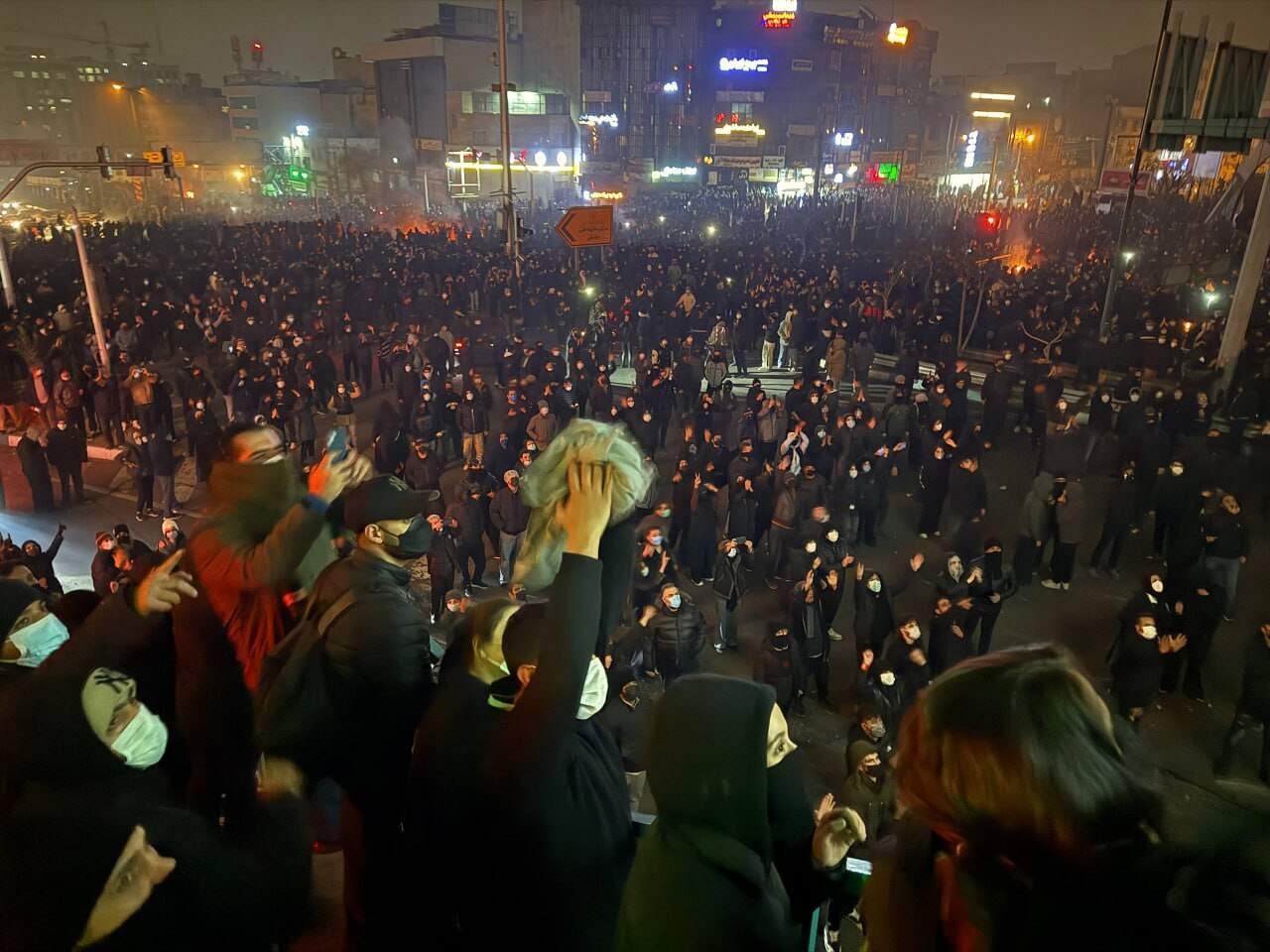
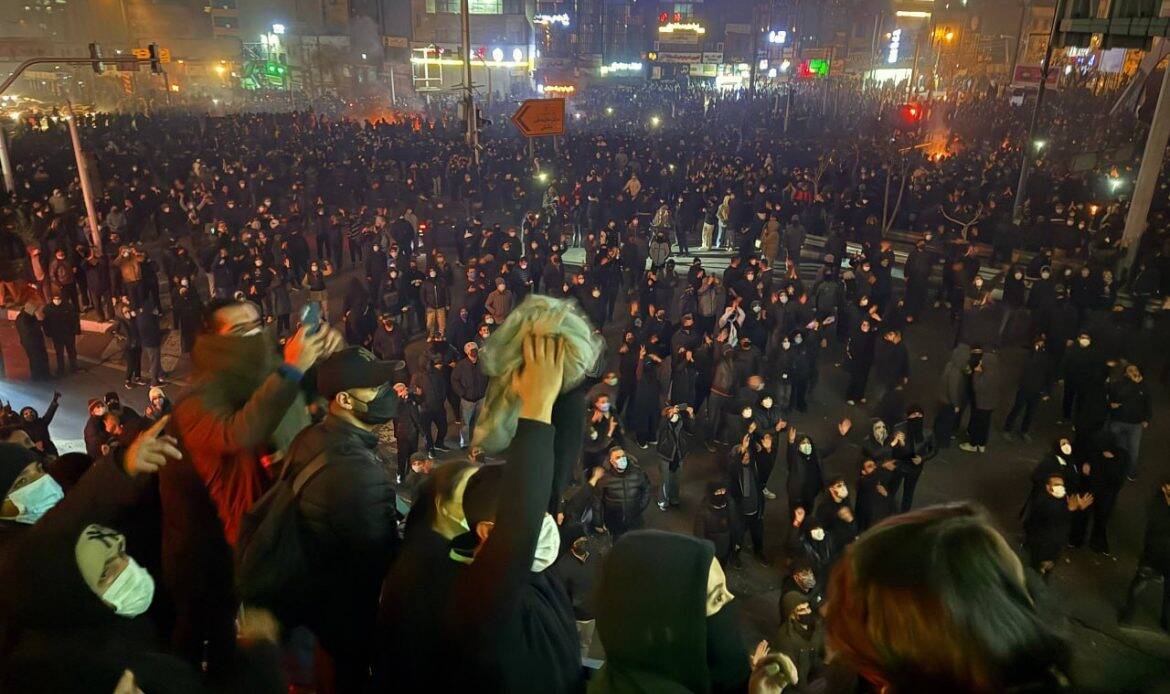
As of the latest available information, the situation surrounding the recent protests in Iran continues to rapidly deteriorate, marked by an escalating and coordinated crackdown by security, intelligence, and law enforcement forces across multiple provinces.
According to HRANA, at least 10681 individuals have been arrested, including women, students, human rights defenders, ethnic and religious minorities, and at least 166 children under the age of 18. The whereabouts of many detainees remain unknown, raising serious concerns about enforced disappearance, incommunicado detention, and exposure to torture and ill-treatment.
A near-total nationwide internet shutdown, now lasting almost 72 hours, has made it virtually impossible to verify the full scope of arrests, injuries, and deaths. The blackout has effectively severed communication, obstructed documentation, and prevented independent reporting. While only limited and unverified information has circulated on social media, several disturbing video recordings—reportedly from Fardis (Karaj), Al-Ghadir Hospital in Tehran and Forensic Diagnostic and Laboratory Center of Kahrizak, Tehran Province —appear to show the bodies of protesters lying on the ground, suggesting the use of lethal force.
A Tehran-based source who briefly managed to access the internet told Femena:
“The number of protesters who have been killed or injured is extremely high and deeply alarming. Almost everyone knows someone who has been killed in the past three days. Our building’s cleaner was killed; my friend’s cousin was shot dead. There are massive numbers of killed protesters in Tehran alone, and we have no information about other cities. They are carrying out a massacre while the internet is shut down. Protests are happening in every neighborhood, with many injured.”
In its latest reporting, BBC Persian cited informed sources stating that the use of live ammunition and lethal force has resulted in the deaths of at least 110 protesters in Tehran and Rasht, while emphasising that the actual death toll is likely significantly higher. In addition, HRANA, the human rights group, reported in its latest update that it has confirmed 544 fatalities across Iran amid the protests, although no independent verification is currently possible.
In a further alarming development, at least 96 videos of forced confessions extracted from detainees have been broadcast on state television or media outlets affiliated with security institutions. These practices strongly indicate the use of coercion, psychological pressure, and possibly torture, and constitute grave violations of international human rights law, including the absolute prohibition of torture.
Adding to the climate of fear, Tehran Prosecutor’s Office, announced that all those arrested—or who may be arrested—will face charges of “Moharebeh” (enmity against God), an offense that carries the death penalty under Iran penal code. Such statements amount to an explicit threat of capital punishment against protesters and violate the principle of legality and fair trial guarantees.
On January 9, Iran’s Supreme Leader Ali Khamenei publicly endorsed the judiciary’s stance, warning protesters that there would be “no mercy” and accusing demonstrators of affiliation with foreign powers, including the United States and Israel. State media simultaneously called on Basij forces to mobilize nightly in mosques across the country to support security forces in suppressing protests. The Islamic Revolutionary Guard Corps (IRGC) also issued statements signaling readiness to escalate repression.
Arrests appear to follow a systematic and coordinated pattern, with large-scale detentions reported in cities including Tehran, Mashhad, Isfahan, Ilam, Yasuj, Gachsaran, Yazdanshahr, Sonqor, Mashhad, Isfahan, and Zanjan. Particularly alarming is the detention of numerous minors, especially girls under the age of 18, in clear violation of international standards requiring special protection for children.
Taken together, these developments point to a deliberate strategy to silence dissent through fear, mass detention, internet blackouts, threats of execution, and forced public confessions. The situation demands urgent international attention, immediate transparency regarding the fate and whereabouts of detainees, and decisive action to prevent further loss of life and irreversible harm to those arbitrarily detained.
Below is a list of women arrested during the protests, based on available and verifiable information prior to the nationwide internet shutdown. Due to the ongoing communications blackout, the actual number of arrests is likely to be significantly higher than documented here.
- Fatemeh Mohamadzadeh – Arrested in Amlash, Gilan Province; transferred to Lakan Prison; January 5, 2026.
- Zahra Heidari – Arrested in Amlash, Gilan Province; January 5, 2025.
- Zahra Nasiri – Arrested in Khorramabad; civilian protester; mother of two; transferred to Khorramabad Prison; January 2, 2026.
- Faezeh Rashidi – Kurdish citizen from Badreh; injured during protests, arrested after being transferred to hospital; January 3, 2026.
- Bayan Farajollahi – Woman Human Rights Defender (WHRD) from Sanandaj; arrested on January 4, 2026. Previously arrested on July 17, 2023, held 41 days in solitary confinement, and later sentenced to one year in prison.
- Yekta Dorzadeh – 20-year-old protester; arrested during protests in Mashhad on January 2, 2026.
- Mahsa Zarei – WHRD from Kermanshah; arrested at her workplace on January 2, 2026.
- Mahshad Keshani – Student from Isfahan; arrested on December 31, 2025.
Previously arrested with 22 other students in July 2023 and sentenced to five years’ imprisonment, of which 4.5 years were suspended and six months enforceable. - Mahsa Basir Tavana – Arrested in Fuman, near Rasht; sister of Mehran Basir Tavana, who was killed by security forces during the 2022 protests.
- Dina Salarī – Citizen from Sonqor; arrested on January 5, 2026.
- Raheleh Zardkouhi – Arrested in Mashhad; date unspecified.
- Zeinab Ivani – Student; arrested in Birjand; held in the Intelligence Department Detention Center; remains in custody.
- Fa’ezeh Shamaili (Sonqor)
- Bahar Rafi’i and Asal Begvand (Sonqor)
- Sahar Reza Doust (Zanjan)
Yasuj
- Anahita Hekmatinia,
- Parichehr Ansari,
- Reyhaneh Pourkaram,
- Samira Karimi Pour,
- Sima Sajadi,
- Sheghayeh Zahedi,
- Ghazal Hamzeh Amleh,
- Fatemeh Mousa Pour,
- Farnoush Azar,
- Mahshid Mousa Pour,
- Mohaddeseh Mohammadi,
- Mozhgan Forouzan,
- Neda Ahmadi,
- Yasin Mohammadi,
- Yalda Pejvani,
- Zahra Darfarin,
- Zohreh Dejman.
- Nazgol Mahmoudi, Gachsaran
- Mehraneh Mousavi Pour, Gachsaran
In Yazdanshahr, at least seven detained girls are under 18 years old, including:
- Maryam Neja Sobhani
- Sogand Soleimani
- Negar Ghorbani
- Mehri Alghasemi
- Elaheh Moghaddasi
- Narges Abdollahi
- Khadijeh Beigi
Human Rights Concerns
The scale, geographic spread, and systematic nature of the arrests; the killing of protesters; the detention of women and children; the broadcast of forced confessions; and the continued refusal of authorities to disclose the whereabouts and legal status of detainees collectively point to grave and ongoing violations of international human rights law.
These include arbitrary deprivation of life, mass arbitrary detention, incommunicado detention, coercion and ill-treatment of detainees, the targeting of children, and the suppression of peaceful protest and expression. Taken together, these practices reflect not isolated abuses but a coordinated policy of repression, aimed at intimidating the population, silencing dissent, and preventing accountability.
Conclusion
The developments documented in this report demonstrate a rapidly escalating crisis, marked by the killing of protesters, large-scale arrests, and an unprecedented campaign of intimidation. Security forces have responded to widespread protests with lethal force, mass detentions, forced confessions, and threats of execution, while the nationwide internet shutdown has concealed the true scale of violence.
The continued lack of transparency regarding the fate and whereabouts of detainees, combined with credible reports of torture, ill-treatment, and denial of due process, places many detained individuals at imminent risk of further abuse, unfair trials, and irreversible harm. The ongoing internet shutdown has further concealed the true scale of killings and arrests, heightening the urgency of international scrutiny.
In light of these grave and ongoing violations, immediate and decisive action is required to prevent further loss of life and to ensure accountability for serious human rights abuses. We therefore call for the following urgent actions:
Demands to the Iranian Authorities
- Cease the use of excessive and lethal force against protesters and ensure that all law enforcement operations comply with international standards on the use of force.
- Allow families of those killed to freely and safely communicate with international media and human rights organizations, and fully respect their right to mourn, including the right to hold memorials and funerals without intimidation, surveillance, or interference.
- Immediately and unconditionally release all individuals detained solely for exercising their rights to peaceful assembly, expression, and protest.
- Disclose without delay the names, locations, and legal status of all detainees, and ensure regular access to lawyers of their choosing, family members, and necessary medical care.
- End the practice of forced confessions, ensure that any statements obtained under coercion are excluded from judicial proceedings, and hold those responsible for torture and ill-treatment accountable.
- Immediately release all detained children and ensure that any proceedings involving minors fully comply with international juvenile justice standards.
Demands to the International Community
- Publicly and unequivocally condemn the ongoing repression and raise these violations in all bilateral and multilateral engagements with Iranian authorities.
- Support independent, international investigations into unlawful killings, mass arrests, and allegations of torture and enforced disappearance.
- Ensure continued monitoring, documentation, and reporting on the situation, with particular attention to women, minorities, and children.
Meaningful and lasting change can only be achieved through respect for the fundamental rights and dignity of the Iranian people. The authorities must choose accountability, transparency, and dialogue over repression, and the international community must act decisively to prevent further abuses and to uphold international human rights principles.