


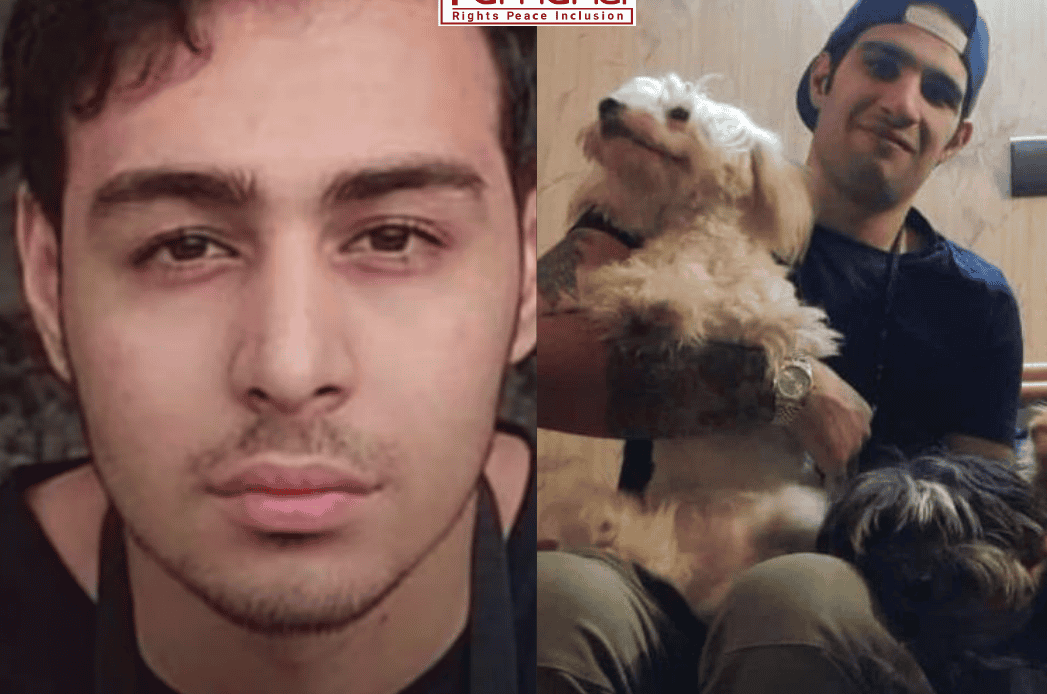
Four political prisoners—Vahid Baniamerian, Abolhassan Montazer, Mohammadamin Biglari, and Shahin Vahedparast, were executed in Iran over the past two days.
Vahid Baniamerian, 33, and Abolhassan Montazer, 66, were arrested in January 2024 on charges of alleged association and membership in the Mojahedin-e Khalq Organization (MEK). They were executed on Saturday, April 3, 2026.
In recent days, Iranian authorities had also executed Babak Alipour, Pouya Ghobadi, as well as Mohammad Taghavi and Akbar Daneshvar Kar, all of whom were accused of links to the MEK.
Mohammadamin Biglari, 20, and Shahin Vahedparast, 30, who had been arrested during the January 2025 protests on charges of setting fire to a Basij base in Tehran—were also executed this morning. They had been sentenced to death by Branch 15 of the Revolutionary Court. Alongside Amirhossein Hatami, Ali Fahim, and Abolfazl Salehi Siavashani, they were convicted in the same case and sentenced to death.
On Thursday, April 2, the Iranian judiciary had also executed Amirhossein Hatami, who was 18 years old at the time of his arrest.
Two defendants in this case, Ali Fahim and Abolfazl Salehi Siavashani, remain at imminent risk of execution, with credible reports indicating that their sentences may be carried out in the coming days.
These defendants were held in prolonged solitary confinement in Ghezel Hesar Prison in Karaj from the time of their arrest and were denied family visits. They were also deprived of access to independent legal counsel during critical stages of their case, in clear violation of international fair trial standards.
The execution of these protesters follows the earlier execution of three others—Saleh Mohammadi, Mehdi Ghasemi, and Saeed Davoudi—who had been arrested during protests in the city of Qom and were executed on March 18, 2026.
The sharp escalation in executions of political prisoners and protesters arrested during the January protests is taking place amid ongoing military attacks on Iran by the United States and Israel. In recent days, significant parts of Iran’s infrastructure have been targeted, while access to the global internet has been almost entirely shut down for more than a month.
This pattern strongly indicates a deliberate intensification of internal political repression under the cover of war and restricted information flows.
Iranian civil society has long warned that war conditions would create an enabling environment for heightened repression, including mass arrests, accelerated trials, and executions of political opponents. These warnings are now being realized.
The judicial processes and trials of protesters arrested during the January demonstrations have raised grave concerns among human rights organizations. Those executed were subjected to rushed proceedings, denied access to independent legal representation, and convicted in trials that lacked transparency and failed to meet even minimum standards of due process. Reports of torture, prolonged solitary confinement, and the use of forced confessions further undermine the legitimacy of these convictions.
Femena expresses its strongest concern over the accelerating use of the death penalty against political prisoners and protesters in Iran. These executions, carried out in a context of war, censorship, and systemic due process violations, point to a broader pattern of state repression aimed at silencing dissent.
Femena calls on the Islamic Republic of Iran to immediately halt all executions, particularly those targeting political prisoners and individuals detained in connection with the January protests; to impose an immediate moratorium on the death penalty; to annul all convictions obtained through torture or coerced confessions; and to ensure full access to fair and transparent judicial proceedings, including the right to independent legal counsel.
The Iranian authorities must also immediately restore full access to the global internet and end all restrictions that prevent families, lawyers, and human rights organizations from obtaining information about detainees.
At the same time, the international community and United Nations mechanisms must act with urgency. They should publicly and unequivocally condemn the ongoing executions, take coordinated measures to pressure Iranian authorities to halt the use of the death penalty, and ensure independent monitoring of the situation. The continuation of war must not be allowed to obscure or justify serious human rights violations.
Ending the ongoing conflict, which has already caused widespread harm to civilians and infrastructure, is also essential to preventing further deterioration of the human rights situation in Iran.
The immediate suspension of all death sentences, the protection of those currently at risk of execution, and the release of individuals arbitrarily detained during the January protests must become urgent priorities for the international community.