
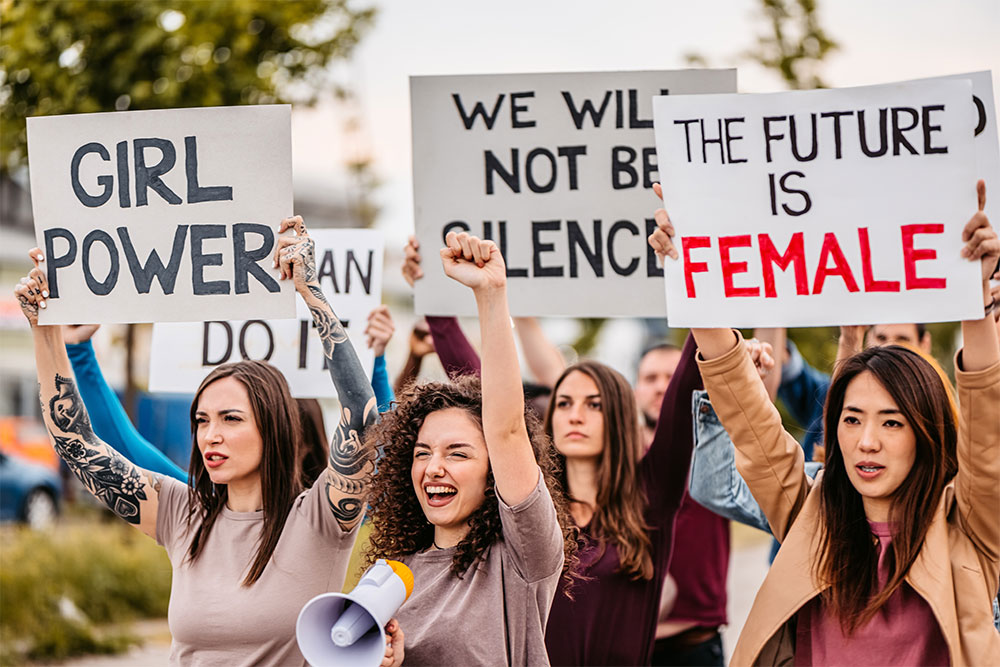

Femena is extremely concerned about the sharp rise in executions of political prisoners, amidst the death and destruction of the illegal war imposed on the country by the US and Israel. Over the past years, Iranian human rights defenders and Iranian civil society groups have repeatedly warned that military action against the country would not only fail to support the struggles of the Iranian people, but would instead intensify repression and place greater pressure on civil society and political opponents. In numerous public statements issued in recent years—particularly during periods of heightened regional tensions—rights defenders, civil society actors, independent labor unions, teachers’ associations, and student groups have emphasized that war creates the conditions for expanded securitization, reduced public oversight, and the silencing of dissent.
Upsurge in Execution of Political Prisoners
The Judiciary of the Islamic Republic of Iran announced on the morning of Tuesday, March 31, 2026, the execution of two political prisoners, Babak Alipour and Pouya Ghobadi, on charges of alleged “membership” in the Mojahedin-e Khalq Organization (MEK).
In an official statement, the two men were accused of “armed rebellion” (baghi) and “participation in carrying out multiple terrorist operations.”
A day earlier, on Monday, two other political prisoners—Mohammad Taghavi Sangdehi and Akbar Daneshvar Kar—had been executed on similar charges.
Those executed over the past two days had previously been sentenced to death in December 2024. Two other defendants in the same case, Vahid Baniamerian and Abolhassan Montazer, are also facing similar death sentences and remain at risk of execution.
Mai Sato, in a letter dated September 5, 2025 (14 Shahrivar 1404), raised alarm with Iranian authorities over the risk of execution facing six political prisoners, including Babak Alipour and Pouya Ghobadi. In her letter, she wrote:
“The detainees were arrested between December 2023 and February 2024 and, during interrogations in Evin Prison, were subjected to severe physical and psychological torture, as well as threats of execution and flogging.”
“The death sentences were issued directly on the basis of coerced confessions. They were held for months (up to 244 days) in solitary confinement without access to legal counsel or contact with their families. The trial, held in Branch 26 of the Revolutionary Court, was extremely brief and conducted without adherence to the principles of a fair trial.”
These concerns echo repeated warnings by UN human rights experts and international organizations regarding the use of torture, denial of due process, and reliance on forced confessions in Iran’s judicial system—particularly in cases involving political prisoners.
The execution of these four political prisoners took place following the execution of three protesters arrested during the January demonstrations—Mehdi Ghasemi, Saleh Mohammadi, and Saeed Davoudi—on March 18, 2026 (28 Esfand 1404).
These three individuals had been detained for participating in anti-government protests in Qom and were accused of killing a security officer.
Saleh Mohammadi, a 19-year-old Greco-Roman wrestler and resident of Qom, had been arrested by security forces on January 14. Mehdi Ghasemi was detained during the January 8 protests in Qom and held at the Nasr detention center, affiliated with the Intelligence Organization of the Islamic Revolutionary Guard Corps (IRGC).
The execution of Kourosh Keyvani—on unspecified charges of alleged espionage for Israel, and who, according to reports, had been arrested during the twelve-day war in June—has further intensified concerns that the Islamic Republic may be using wartime conditions, as well as the complete shutdown of the internet, to carry out reprisals against its political opponents.
Iranian civil society—despite four decades of repression, killings, and imprisonment—has consistently pursued its struggle against authoritarianism through peaceful and non-violent means. At the same time, during the 1980s and in parallel with the Iran–Iraq War, thousands of political prisoners were executed in Iranian prisons by the Islamic Republic. Today, Iranian society and in particular rights defenders once again find themselves in a similar situation, facing renewed pressure under wartime conditions.
Others At Risk of Execution
The spate of executions has increased concern for the lives of several others arrested during the January protests. Five of nine individuals who originally received death sentences —including Mohammadamin Biglari, Amirhossein Hatami, Arian Fahim, Shahin Vahedparast, Abolfazl Salehi Siavashani, are at imminent risk of execution, as recent reports indicate their death sentences have been upheld and their cases referred to the implementation office at Ghezel Hesar Prison. According to the most recent updates, these five young prisoners have been removed from their ward and transferred to an undisclosed location, raising serious concerns about the imminent implementation of their sentences.
They have been accused of setting fire to a Basij base on Damavand Street in Tehran. They were arrested on January 8, after which their forced confessions were broadcast on state television, raising further concerns about due process violations and the use of televised confessions. Yasser Rajai’e and Shahb Zohdi, had also been charged in this case, but the status of their sentences are unclear at this point.
In addition to these individuals, other cases related to the January protests have also faced the risk of death sentences. However, due to the internet shutdown and the resulting disruption in communication between human rights organizations and sources inside the country, there is no precise or reliable information available about them, and many cases remain undocumented.
However, Mohammad Abbasi and Mohammadreza Tabari —had also initially received death sentences. Also, the case of Ehsan Hosseinipour, who was tried in a public court alongside two other defendants—an 18-year-old, Matin Mohammadi, and a 17-year-old, Erfan Amiri—on charges of setting fire to a mosque in the Pakdasht area, remains of concern.
Internet Shut Down Impeding Monitoring and Documentation of Rights Abuses
Meanwhile, the fate of thousands of individuals arrested during the January protests remains unknown. For more than a month, various human rights groups that had been monitoring and reporting on the situation of detainees have lost the ability to communicate and gather information, significantly limiting independent verification.
Families of those detained, due to the internet shutdown, have also been unable to establish any contact with human rights organizations or media outlets outside the country, leaving them isolated and without access to support or information.
The widespread disruption of internet access has not only restricted the flow of information but has also raised serious concerns about the potential for further human rights violations to take place without scrutiny or documentation.
Scattered reports, along with the continued implementation of execution sentences, indicate that despite the fact that many courts and judicial institutions have been closed or disrupted over the past month due to wartime conditions and concerns that their buildings could be targeted, the prosecution of individuals arrested during the January protests has continued. Alarmingly, in some cases, death sentences have been carried out less than three months after the protests took place, raising serious concerns about the speed of proceedings, lack of transparency, and the absence of due process guarantees.
Civil Society Continues to Protest Repression and War
The long-standing concerns of Iran’s civil society about the intensification of domestic repression under the shadow of war and military conflict have now become a reality. These activists continue to push back against state repression while also rejecting military intervention and war
Many activists inside the country report an increasingly securitized atmosphere following the start of the war, warning that the Islamic Republic appears to be reverting to the conditions of the 1980s—when thousands of political prisoners were executed and even the slightest dissent was met with the harshest sentences, including long-term imprisonment and execution—once again under the cover of war.
On March 19, one day before the Iranian New Year, security forces raided the homes of several civil society activists, including Mohammad Habibi, a teachers’ union activist, and confiscated all of their electronic devices.
Such raids, targeting activists and independent voices, are widely seen as part of a broader effort to silence civil society and prevent the dissemination of information during a period of heightened political and military tension.
Mohammad Habibi, who was able to briefly connect to the international internet for a few minutes, wrote in a tweet:
“I have always opposed war and continue to do so. War brings nothing but destruction and the entrenchment of authoritarianism. However, one day before the New Year, security forces raided our home, ransacked everything, and took all our means of communication. We have managed, with difficulty, to obtain two mobile phones. Even so, I still say: no to war.”
In light of these developments, urgent action is required to prevent further loss of life and to uphold fundamental human rights. At a minimum, Iranian authorities should immediately halt all executions, particularly those linked to political cases; ensure fair trial guarantees, including access to legal counsel and the exclusion of coerced confessions; restore full internet access and end restrictions on communication; and provide transparent information regarding the status and whereabouts of all detainees. At the same time, the international community and United Nations mechanisms should intensify efforts to monitor the situation, publicly call for an immediate moratorium on executions, and ensure that ongoing conflict does not serve as a cover for further human rights violations.