

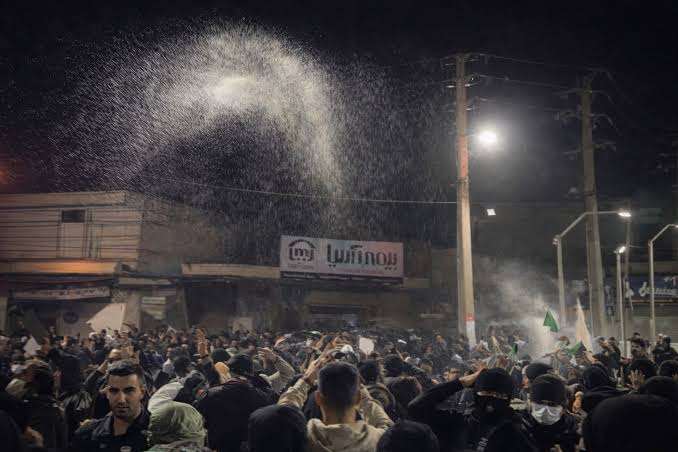
17 days have passed since the complete shutdown of the internet in Iran. Over the past few days, a number of people who have managed with great difficulty and for brief moments to connect to the internet have borne witness to a horrific massacre unfolding in various cities across Iran. Although access to accurate casualty figures has not yet been possible, an increasing number of videos documenting the mass killing of civilians have made their way out of the country, pointing to an unprecedented crime committed against protesters in Iran. Several human rights organizations currently documenting the killings have described them as constituting crimes against humanity.
Mai Sato, the UN Special Rapporteur on the situation of human rights in Iran, has stated that existing estimates may be far higher than initial figures: “Preliminary assessments indicate that the death toll may be around 5,000 or more, but information received from doctors inside the country suggests that the number of victims may be at least 20,000.”
At the same time, there is no reliable data on the number of detainees. Tasnim, a newspaper affiliated with Iran’s Islamic Revolutionary Guard Corps (IRGC), has reported that 3,000 individuals have been arrested, describing them as “members of terrorist groups, leaders of riots, individuals linked to the Zionist regime, armed individuals, and vandals who damaged public property, whose hands are stained with the blood of the Iranian people.” Earlier, the Tehran Prosecutor had declared that there would be “no mercy toward armed terrorists” and that their punishment would be Moharebeh (waging war against God).
These statements come amid reports from numerous families who have received no information about their detainees. Their efforts to obtain information from various institutions have been unsuccessful, and they have reportedly faced degrading treatment and verbal abuse. The daily newspaper Ham-Mihan, in interviews with families and attorneys, reported that the number of detainees across different cities is extremely high. Some detainees have been able to make brief phone calls to their families. Others have been charged with “propaganda against the Islamic Republic” and “assembly and collusion to act against national security.” In several cases, exorbitant bail amounts have been set, while the location of detention for many detainees remains unknown.
In a report, the daily newspaper Shargh wrote that follow-ups with police stations and families of detainees indicate that many sons and daughters, mothers and fathers, and spouses have not returned home from work. Some individuals who had gone to gyms were caught up in the protests and never made it back home. Their families have no information about their whereabouts. The report focuses on individuals whose families insist that their involvement in the protests was virtually none and they were passersby, pedestrians, or mere bystanders. Yet they have found no trace of their loved ones at forensic medicine organizations, nor have they received clear guidance on where to turn. Their attempts to seek answers from relevant authorities have resulted in continuous bureaucratic dead-ends. The report quotes a lawyer present outside the prosecutor’s office as saying: “I have never seen arrests on this scale before.”
Risk of Summary Trials, Harsh Sentences, and Executions
According to Article 282 of Iran’s Islamic Penal Code, the punishment for Moharebeh includes one of the following four penalties:
(a) execution
(b) crucifixion
(c) amputation of the right hand and left foot or
(d) internal exile
In practice, Iran’s judiciary most often issues death sentences for those convicted of this charge. Recently Gholamhossein Mohseni Ejei, Head of Iran’s Judiciary, stated that the “timely and uncompromising prosecution and punishment of criminals involved in recent events, especially the leaders and principal actors, will serve as a deterrent,” and announced that Revolutionary Courts would soon be convened to try detained protesters. Ejei described the protests as “American–Zionist riots” and warned that the “instigators, agitators, and perpetrators of terrorist acts and unrest in recent events will certainly be tried and punished under the law with the utmost precision and speed.” He further announced that he had ordered the submission of urgent bills, under expedited legislative procedures, to address any potential legal gaps in punishing protesters immediately. Such statements amount to an explicit threat of capital punishment against protesters and violate the principle of legality and fair trial guarantees.
Ejei also stated that public trials for detainees were being pursued. This is despite the fact that the public trials of protesters in 2022 were rife with serious legal violations, and human rights lawyers repeatedly stated that the issued verdicts lacked sufficient and convincing evidence. The emphasis on expedited proceedings, deterrent sentencing against detainees constitutes a serious alarm regarding the fate of those arrested in the latest protests. Some human rights organizations, including HRANA, have reported that the number of detainees is at least 26,541. Under these circumstances, combined with denial of access to legal counsel, the risks of fabricated charges, unlawful courts, summary trials, harsh sentences, and capital punishment for protesters are extremely serious. Several human rights lawyers have reported that their efforts to formally represent detainees have been unsuccessful, as the judiciary has actively blocked them. In recent days, several human rights lawyers, including Shima Ghousheh and Mohammad Hadi Jafarpoor, have been arrested.
Following the outbreak of protests, several human rights lawyers announced on social media that they would provide free legal representation and consultation to detainees and their families. Ham-Mihan reported, following interviews with some of these lawyers, that certain state institutions contacted them and questioned them specifically because they had accepted these cases. Osman Moazen, now himself detained, had told Ham-Mihan regarding the judiciary’s attribution of Moharebeh charges to detainees: “The charge of Moharebeh has a specific legal definition, and a judicial authority cannot declare a uniform charge for all people without sufficient, concrete elements and evidence. It has no legal basis for a judicial authority to broadly attribute a single charge to a large group of people.”
Another human rights lawyer stated that one of the main concerns is that, due to the securitized handling of these cases, detainees are being deprived of their fundamental rights, including access to legal counsel, the right to an effective defence, and access to case files. The widespread use of temporary detention orders accompanied by excessive bail amounts further confirms these concerns. On January 19, the President of the United States stated that Iranian authorities had intended to execute 837 protesters in recent days but refrained after he issued warnings and threats. However, 3 days ago, the family of Ali Rahbar, a 33-year-old man, announced that he had been executed in Mashhad. He had been arrested only ten days earlier, and his family has received no information regarding the charges brought against him.
Denial of Access to Medical Care
According to images circulated on social media on January 4, security forces violently stormed Imam Khomeini Hospital in Malekshahi, Ilam Province, in an attempt to abduct individuals injured during the recent protests who had been transferred to the hospital for treatment. The footage shows security forces entering the hospital and firing live ammunition and tear gas, breaking down hospital doors, storming patient rooms, and attacking people inside the hospital using batons and military equipment. Videos received from Iran also show nurses and civilians clashing with security forces outside the hospital. Amnesty International has stated that “security forces repeatedly entered hospitals and arrested injured protesters who were receiving medical treatment, along with their family members.”
Two days after the attack on Imam Khomeini Hospital, on January 6, security forces of the Islamic Republic also raided Sina Hospital in Tehran. Several doctors also have reported receiving threatening phone calls warning them not to treat protesters injured during nationwide demonstrations. They were instructed to refrain from providing medical care and to immediately notify security authorities if any injured individuals sought treatment.
Based on these reports, it is feared that a number of injured protesters may be among those detained and are being denied access to essential medical care. The Iran Human Rights Organization, based in Oslo, citing a source regarding the condition of detainees in Shiraz, reported that a large number of prisoners, particularly those transferred from Marvdasht to Shiraz, had been injured by pellet gunfire, and that several individuals died in prison because of their injuries. According to these sources, medical conditions inside the prison have become so critical that a prison doctor, Dr. Jafarzadeh, was arrested for insisting on providing treatment to the wounded. Medical staff had reportedly been ordered not to treat injured detainees, allowing them to bleed to death.
Furthermore, according to reports by human rights organizations, Iran’s judiciary has repeatedly used the denial of medical care as a punitive measure and as a tool to silence protesters, in some cases resulting in prisoners’ deaths. Consequently, detainees who had pre-existing medical conditions and required ongoing treatment are also at serious risk of being denied medical care, endangering their health and lives. A report by the newspaper Shargh, citing families of recently detained individuals, states that detention centers have refused to accept essential medications for detainees. The father of one detainee said that his son had undergone heart stent surgery just recently, and that without his prescribed medication, he faces a serious risk of suffering a heart attack.
Sexual Violence, Torture, and Forced Confessions
The experiences of detainees during protest movements and popular uprisings over the past two decades in Iran, demonstrate a consistent pattern whereby mass arrests during periods of civil unrest are accompanied by an escalation in physical violence, torture, and other forms of ill-treatment. During such periods, severe overcrowding in detention facilities, combined with the systematic use of unofficial and unmonitored detention centers, has resulted in thousands of detainees being held incommunicado, subjected to interrogation, and coerced into making confessions, thereby significantly heightening the risk of torture and abuse.
Radio Farda reported that in Khorramabad, a significant number of detained individuals were teenagers who were subjected to torture. Similarly, the newspaper Ham-mihan, citing the family of a detainee in Shiraz, reported that many of those arrested were teenagers and that the treatment to which they were subjected was particularly severe and inappropriate, raising serious concerns regarding violations of Iran’s obligations under the Convention on the Rights of the Child.
Meanwile, a new wave of forced confessions broadcast on state television and other government-affiliated media outlets has been documented. The human rights organization HRANA has recorded 191 instances of forced confessions aired to date. Based on consistent patterns established through prior cases and survivor testimonies, such confessions are routinely extracted through psychological coercion, torture, and physical violence, in violation of the prohibition against self-incrimination and the absolute ban on torture under international law. In a recent documented case, a minor was compelled to appear on camera and subjected to humiliating and degrading treatment. These practices strongly indicate the use of coercion, psychological pressure, and possibly torture, and constitute grave violations of international human rights law.
Credible reports have also emerged documenting sexual violence and threats of sexual violence against detainees. In a report published on 5 January 2026, the Abdorrahman Boroumand Center stated that Islamic Republic security forces transferred at least 20 women protesters -all arrested during recent demonstrations in the city of Yazd- to solitary confinement cells in the women’s ward of Yazd Central Prison. At least two of these women reported that they were threatened with rape by agents of the IRGC forces at the time of their arrest.
Furthermore, on 19 January 2026, The Guardian reported cases of sexual assault against detainees in connection with the protests in Kermanshah, noting that a 16-year-old boy was among those subjected to sexual abuse by security forces while in detention. According to The Guardian, citing the Kurdistan Human Rights Network, two detainees in Kermanshah, one of whom was a child, reported being sexually assaulted by the police at the time of arrest.
While internet shutdowns and the urgent need to document the number of individuals killed during the protests have become the main concern, abuses committed against detainees and the risk of torture and sexual violence against them remains acute and systemic, particularly given the overcrowding of detention facilities and the anonymity of those detained. Documentation collected by Amnesty International and Human Rights Watch in relation to the Woman, Life, Freedom uprising indicates the systematic use of sexual violence as a tool of repression against protesters. These findings have been further corroborated by the United Nations Independent Fact-Finding Mission on Iran, which has confirmed patterns of torture, sexual violence, and other forms of cruel, inhuman, or degrading treatment or punishment.
Over 1,600 Activists Warn Against the Repression and Killing of Prisoners
Recently, more than 1,600 activists, journalists, artists and etc, from around the world, signed an online petition warning against the continuation of brutal repression in Iran through the escalation of violence against detainees.
The statement strongly condemns the crimes of the Islamic Republic against protesters and warns of the intensification of arrests of children, torture, forced confessions, denial of medical care, and the imminent risk of execution within prisons and both official and unofficial detention centers. The signatories emphasize that, amid widespread communication shutdowns and the absence of public oversight, the risk of a recurrence of previous mass atrocities in prisons has increased dramatically.
According to the statement, detainees are facing serious threats, including:
1. The arrest and torture of minors.
2. Physical abuse, including beatings, rape, sexual assault, deprivation of adequate food and water, forced administration of unknown or compulsory drugs, denial of medical care, and inhumane living conditions.
3. Psychological torture, including solitary confinement, mock executions, coerced confessions, threats directed at detainees through pressure on their families, and discriminatory mental and psychological abuse based on sex, gender, sexual orientation, nationality, ethnicity, or religion
4. Denial of access to lawyers or independent legal representation
5. Denial of medical care and essential medications
6. Restriction of phone calls and visits
7. Humiliation and threats to human dignity
The signatories have called for urgent and effective protection measures for prisoners and detainees: We, the authors and signatories of this statement, call on all individuals, organisations, institutions, and media outlets to serve as the voice of prisoners and their families, and to take immediate action to safeguard their fundamental rights and security. In accordance with international human rights law, we demand:
1. The immediate and unconditional release of all political prisoners and prisoners of conscience
2. The complete abolition of the death penalty
3. The guarantee of detainees’ fundamental rights, including access to communication, visits, and legal counsel
4. The protection and safety of prisoners’ families
Amid severed communication with Iran, lack of transparency, and insufficient attention to the plight of detainees and prisoners, we warn that the repetition of the gruesome atrocities of previous uprisings within prisons is more likely than ever. Elevating the voices of prisoners and safeguarding their lives, health, and freedom is an urgent political and moral imperative. Sign the petition here